
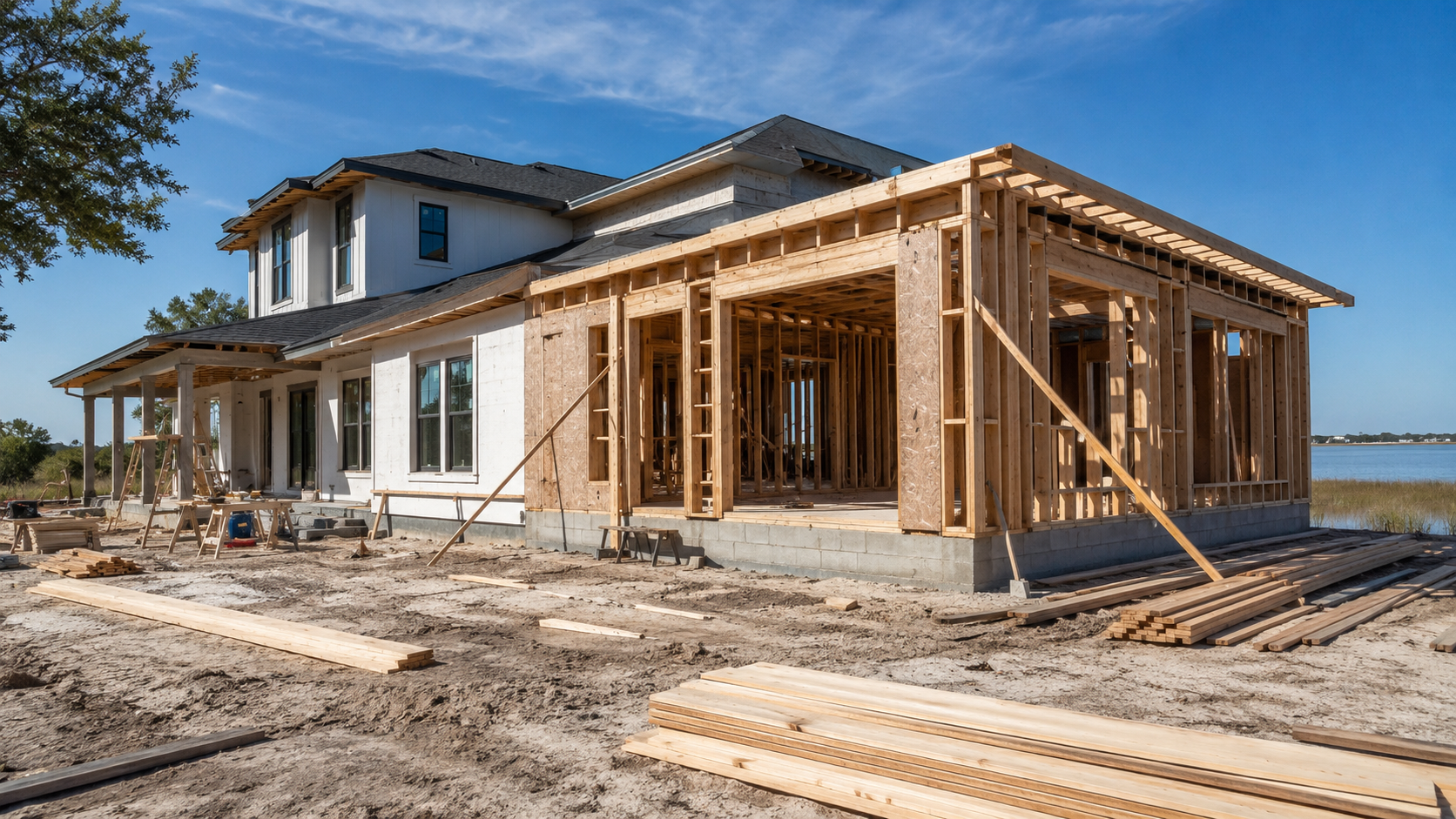
Home additions follow a predictable timeline made of distinct phases, and knowing how each phase flows into the next is the best way to set realistic expectations and keep your project moving without surprises. Ofir Engineering is a licensed Florida general contractor (License #CGC 1540016) with 15+ years serving Jacksonville, Ponte Vedra, St. Johns, and Northeast Florida.
A Realistic Home Additions Timeline, Phase by Phase
Homeowners almost always ask “how long?” before they ask “how much?” The reason the answer varies is that an addition is really six sequential phases, each with its own pace and its own dependencies. Some phases move quickly with good preparation; others depend on outside parties like the local building department. When you understand the sequence, you can see where time is spent, where it can be compressed, and where patience simply pays off. For the full scope of what we build, see our home additions services.
Planning and Zoning: The Groundwork
The first phase is defining what you want and confirming your property allows it. This is where setbacks, lot coverage, and any HOA or overlay restrictions get checked before a single line is drawn. Rushing this phase is a false economy—confirming feasibility early prevents redesigns later. Homeowners who arrive with a clear wish list and existing plans move through planning faster than those still weighing options. Expect this to take a few weeks, and treat it as the foundation for everything downstream.
Design and Structural Engineering
Once feasibility is confirmed, the design develops into permit-ready drawings, and a structural engineer sizes beams, connections, and any foundation reinforcement. For a second-story addition, this phase is especially important because the existing structure has to be evaluated to carry new loads. Design typically spans several weeks and often overlaps with early planning tasks. The more decisions you finalize here—layout, window placement, finish direction—the less likely you are to trigger costly changes mid-build.
Permitting in Duval and St. Johns
Permitting is the phase most influenced by factors outside your control. Plans go to the local building department for review, and timelines vary by jurisdiction and current workload. A complete, code-compliant submittal moves faster than one that draws review comments and correction cycles. Working with a contractor who submits clean packages the first time is one of the most effective ways to protect your schedule during this phase.
Foundation, Structure, and Systems
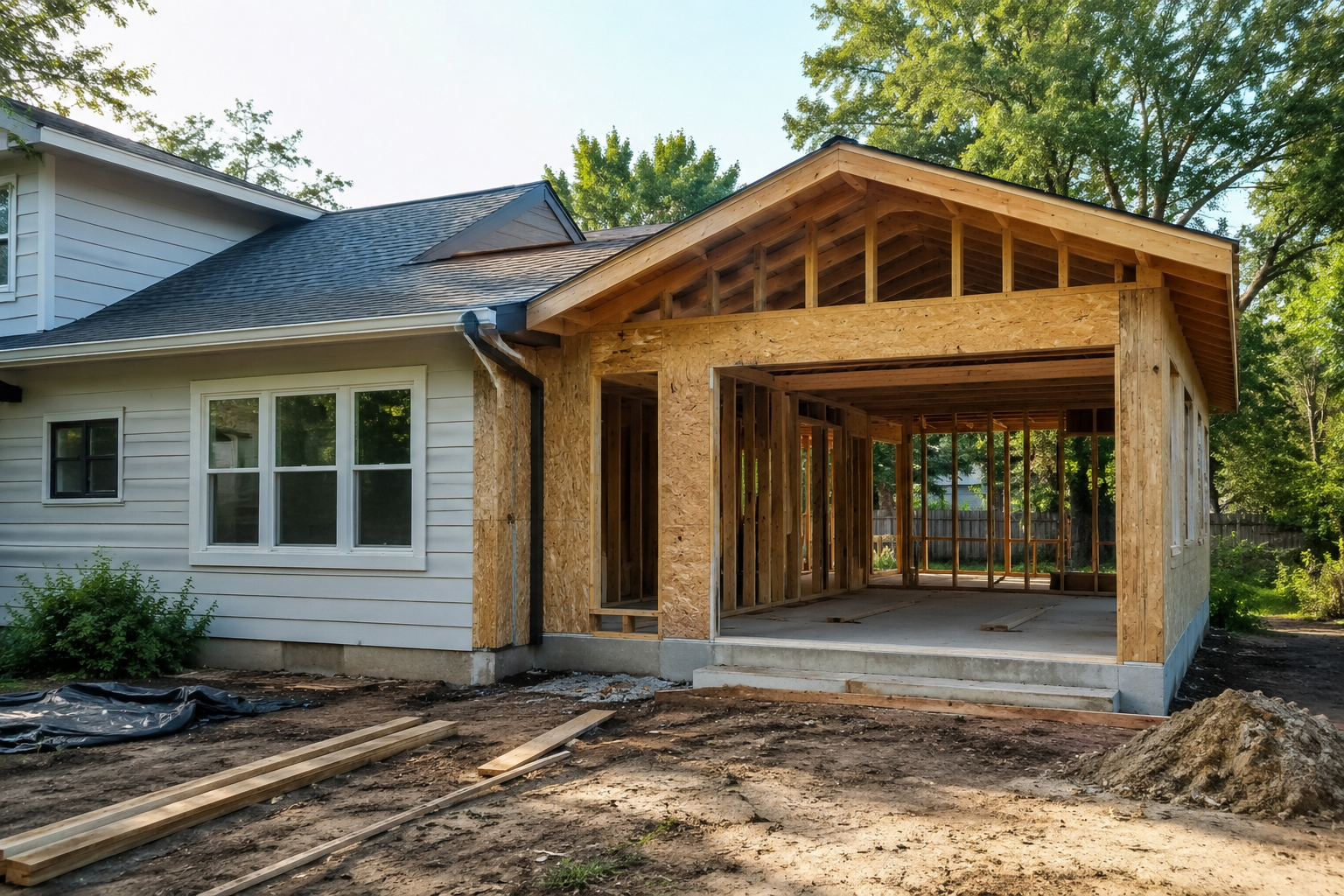
With permits in hand, physical work begins: foundation, framing, roof tie-in, and then the rough-in of electrical, plumbing, and HVAC. This is the most visible phase and the one homeowners enjoy watching. Weather can influence the early exterior work in Northeast Florida, and inspections punctuate this phase—each rough-in must pass before walls close. Good sequencing keeps trades from waiting on one another, which is where an experienced general contractor earns their keep.
Finishes and Closeout
The final phase turns a weather-tight shell into finished living space: insulation, drywall, flooring, trim, paint, fixtures, and the exterior blending that makes the addition look original. Closeout includes final inspections and, ultimately, the sign-off that clears the space for use. Finishes reward decisiveness—when selections are made early and materials are on hand, this phase flows smoothly rather than stalling on backorders.
What Lengthens a Timeline and How to Stay on Schedule
The most common delays are avoidable: mid-project design changes, late material selections, permit correction cycles, and surprises inside older homes. You keep an addition on schedule by finalizing decisions before construction, choosing a contractor who submits complete permit packages, and building a small time buffer for the unknowns. You can review Florida’s building requirements through the Florida Building Commission. When you are ready to map a realistic schedule for your home, our team can help; start with our home additions overview, or reach out through our contact page.
How the Type of Addition Shapes Your Timeline
Not every addition moves at the same pace, and the type you choose is one of the biggest schedule variables. A single-story room addition on grade is usually the quickest because the foundation and roof tie-in are straightforward. A sunroom can move quickly too when it is unconditioned, but conditioned space that ties into your HVAC adds mechanical work and inspections. An in-law suite brings a full bath and kitchenette, so plumbing and electrical rough-ins take longer. A second-story addition is typically the most involved, because the existing home has to be evaluated and sometimes reinforced to carry new loads before framing can even begin. Knowing where your project sits on that spectrum keeps your expectations grounded from the first planning meeting.
Frequently Asked Questions
What is the longest phase of a home addition?
It varies, but permitting and construction are usually the longest. Permitting depends on the local building department’s workload, while construction length scales with the size and complexity of the addition.
Can any phases overlap to save time?
Yes. Design and early planning often overlap, and material ordering can begin before construction starts. The build phases themselves are largely sequential because each depends on inspections passing before the next begins.
What causes home addition timelines to slip?
Mid-project changes, late finish selections, permit correction cycles, and hidden conditions in older homes are the top culprits. Finalizing decisions early and submitting complete permit packages are the best defenses.
Does weather affect the schedule in Jacksonville?
It can influence the early exterior phases—foundation, framing, and roof tie-in. Once the addition is weather-tight, interior finish work continues regardless of conditions outside.
Keep Building With Ofir Engineering
Related discussions & follow us: Facebook · Reddit
Latest & related guides: Explore more Home Additions guides →