
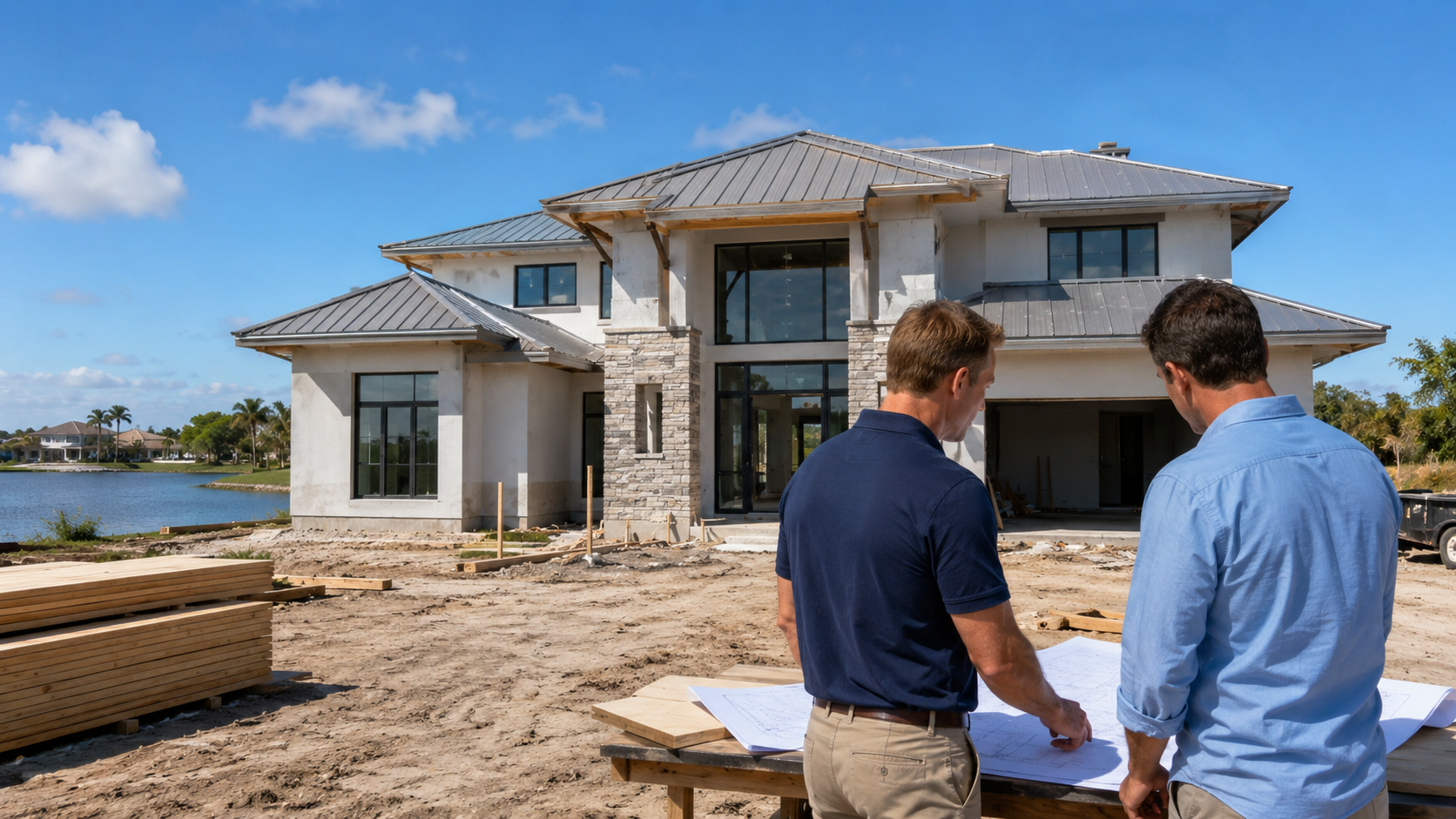
Understanding what a custom house builder charges starts with learning to read an estimate line by line—because the total at the bottom means little until you understand what each line above it includes. Ofir Engineering is a licensed Florida general contractor (License #CGC 1540016) with 15+ years serving Jacksonville, Ponte Vedra, St. Johns, and Northeast Florida.
A builder’s estimate is a document you should be able to interrogate, not just accept. The best way to protect your budget is to know what belongs on the page, what each section represents, and where the traps hide. This guide walks through a typical estimate the way an experienced owner would review it.
What a Custom House Builder Charges For
The charge on a builder’s estimate covers three things: the direct cost of building (materials and the trades who install them), the indirect costs of running the project (supervision, permits, insurance, cleanup), and the builder’s fee for managing all of it. A trustworthy estimate separates these so you can see where your money goes; a vague one lumps them into a single figure that is impossible to question. Before you weigh any number, verify the company is properly licensed—ours is license 1540016, and you can confirm any Florida contractor through the state. An estimate from an unlicensed operator is not a bargain; it is a liability.
Reading the Estimate Top to Bottom
A well-built estimate is organized by construction phase: site work, foundation, framing, roofing, mechanical/electrical/plumbing, insulation and drywall, interior and exterior finishes, then final grading and cleanup. Reading it in that order shows whether the builder has thought the job through. Watch for phases that are suspiciously thin or missing entirely—an estimate with no site-work line on a wooded lot, or no allowance for landscaping, is not cheaper; it is incomplete. Each phase should carry enough detail that you can tell what is included, so you are never guessing what the number represents.
Decoding Allowances and Specifications
Allowances are the lines to scrutinize hardest. Wherever the estimate says “flooring allowance” or “appliance allowance,” the builder is holding a place for a choice you have not made. Low allowances make a total look competitive and then generate change orders once you pick real finishes. Compare each allowance against what you actually intend to install and ask the builder to adjust unrealistic ones upward now, on paper, rather than later, in surprise invoices. A specification sheet attached to the estimate—listing exact products where known—is a strong sign of a builder who prices honestly. This transparency is central to how we approach custom home construction.
Overhead, Fee, and Markup
Somewhere on the estimate sits the builder’s compensation—sometimes a general-conditions line for supervision and jobsite costs plus a separate fee or percentage markup. Do not react to this line as waste. It pays for the person who schedules trades, catches errors, manages inspections, and warranties the result. A builder who appears to charge no fee has simply hidden it inside inflated trade prices, which is harder to audit. Ask directly how overhead and fee are calculated and what they include, so you can compare two builders on the same basis rather than being fooled by where each chose to place the same money.
Exclusions, Change Orders, and Fine Print
The most expensive words in any estimate are the ones not printed on it. Read the exclusions list and the change-order clause as carefully as the prices. Exclusions tell you what you will pay for separately—window treatments, pools, certain utility connections—and the change-order clause governs every dollar spent after signing, including how changes are priced and approved. A fair estimate states its assumptions and exclusions plainly. Florida’s licensing and code requirements also shape what a builder must include; you can verify any contractor’s standing at the Florida DBPR before you commit to their numbers.
Comparing Two Builders’ Estimates
To compare fairly, put both estimates in the same phase order, match their allowances and specifications, and confirm they include the same site work, soft costs, and exclusions. A lower bottom line often just means lower allowances or a missing phase, not a better deal. Ask each builder to explain any line you do not understand—willingness to do so tells you as much as the price. Once the documents are normalized, the honest number usually reveals itself. When you want an estimate you can read with confidence, contact our Jacksonville team and we will walk every line of your new home construction with you.
Frequently Asked Questions
What does a custom house builder’s charge actually include?
Three things: direct construction costs (materials and trades), indirect project costs (supervision, permits, insurance, cleanup), and the builder’s fee for managing the job. A trustworthy estimate separates them so you can see where money goes; a vague single figure is impossible to question or compare.
Which estimate lines deserve the most scrutiny?
Allowances. Any line labeled “allowance” is a placeholder for a selection you have not made. Low allowances make a total look competitive and then generate change orders. Compare each against what you intend to install and have unrealistic ones adjusted upward on paper before signing.
Should I be worried about the builder’s fee or markup?
No—every builder charges for supervision, coordination, and warranty. A builder who appears to charge nothing has hidden the fee inside inflated trade prices, which is harder to audit. Ask how overhead and fee are calculated so you can compare builders on the same basis.
How do I compare two builders’ estimates fairly?
Put both in the same phase order, match their allowances and specifications, and confirm identical site work, soft costs, and exclusions. A lower total often just reflects lower allowances or a missing phase. Ask each builder to explain any unclear line before judging the number.
Keep Building With Ofir Engineering
Related discussions & follow us: Facebook · Reddit
Latest & related guides: Explore more Custom Home Construction guides →