
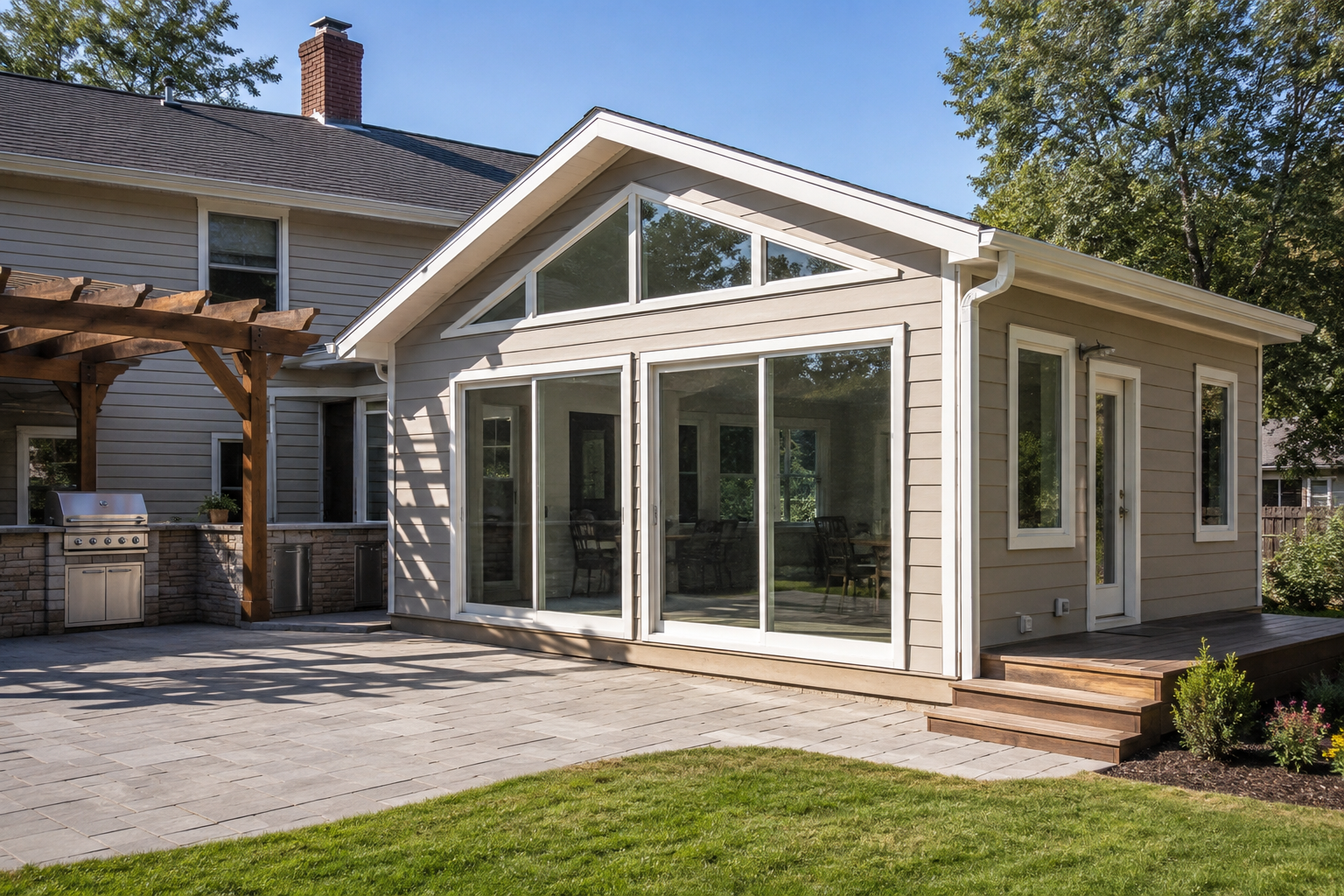
If you have been searching for home addition contractors near me, you already sense that where a builder is based, and where your house sits in the Jacksonville area, can shape the final price as much as the square footage you add. Ofir Engineering is a licensed Florida general contractor (License #CGC 1540016) with 15+ years serving Jacksonville, Ponte Vedra, St. Johns, and Northeast Florida.
Adding space to your home is one of the smartest ways to gain square footage without buying a new house and paying to move. But the quote you receive depends heavily on local conditions that national cost calculators simply cannot see. This guide walks through the real drivers of home addition pricing in our market, so you can read an estimate with a critical eye and understand exactly what you are paying for.
What ‘home addition contractors near me’ really means for your cost
Proximity is not just a convenience, it is a line item. A contractor already working in your zip code has crews, suppliers, and inspectors they know within a short drive. That reduces mobilization time, fuel and travel charges, and the risk of delays when a truck has to cross the county twice a day. When you compare bids from a genuinely local builder against a firm traveling in from another region, the local team often carries lower overhead per project, even if their hourly rates look similar on paper.
Local knowledge also protects your budget in less obvious ways. A Jacksonville-based contractor knows which soils tend to need extra footing work near the river and marsh areas, which neighborhoods have older electrical services that must be upgraded, and how long the local permit office realistically takes. You can review the full scope of what we handle on our Jacksonville home additions service page to see how a defined scope keeps surprises out of the invoice.
Local Jacksonville factors that drive home addition pricing
Northeast Florida has its own cost fingerprint. Our high humidity and heavy summer rain push the value of proper flashing, moisture barriers, and quality roofing at every tie-in point where new construction meets old. Cutting those corners is cheaper today and far more expensive in three years. Coastal and near-coastal properties in Ponte Vedra and the Beaches face wind-load requirements that demand stronger connectors, impact-rated windows, and engineered tie-downs, all of which add material and labor.
Lot conditions matter too. A tight urban lot in Riverside or San Marco may limit where equipment can stage, while a larger St. Johns County parcel may need longer utility runs to reach the new space. Access, tree protection, existing foundation type, and even the height of your current roofline all move the number. Two identical floor plans on two different lots can carry meaningfully different prices.
Permitting and building code in Duval and St. Johns counties
Every legitimate addition in our area requires a permit, plan review, and a series of inspections. That process protects your investment and your resale value, and it is one of the clearest signs of a professional contractor versus an unlicensed handyman. The rules your project must meet come from the Florida Building Code, which you can review directly at floridabuilding.org, along with local amendments enforced by Duval or St. Johns County.
Permit and impact fees are a real cost, and they scale with the size and use of your addition. Adding a bedroom or a full living suite can trigger fees that a simple non-conditioned space would not. A seasoned local contractor builds these into the estimate up front rather than surprising you mid-project, and they schedule inspections to keep the timeline tight instead of letting the job sit waiting on a re-inspection.
How proximity affects labor, logistics, and timeline
Labor is usually the largest slice of an addition budget, and a local crew is more efficient with it. When your framers, electricians, plumbers, and finish carpenters are all working within their home market, scheduling gaps shrink. That matters because an addition is a sequence, framing must pass inspection before insulation, insulation before drywall, and each handoff is a chance for delay. A tightly managed local schedule keeps trades moving and keeps you from paying for idle days.
Material logistics follow the same logic. Established relationships with area suppliers can mean better pricing, faster restocks when a material is back-ordered, and fewer emergency runs. When a contractor has to import both crews and materials from far away, small hiccups compound into big delays, and delays almost always cost money.
Typical cost ranges to plan around
Rather than a single magic number, think in ranges tied to complexity. A modest, single-story bump-out that reuses existing rooflines and utilities sits at the lower end of the spectrum. A full primary suite with a new bathroom, upgraded electrical panel, and its own HVAC zone sits considerably higher because it adds systems, not just space. A second story is the most complex tier, since it may require foundation reinforcement and temporary weather protection for the home below.
The honest way to read any estimate is to look at what drives it: structural work, new mechanical systems, finish level, and site conditions. Any contractor who promises a firm guaranteed price before seeing your home and pulling permits is guessing, and that guess usually protects them, not you. A transparent, itemized proposal is worth far more than the lowest headline figure.
How to vet a local home addition contractor
Start with the license. Confirm the contractor holds an active Florida certification, License #CGC 1540016 in our case, and ask for proof of insurance. Then ask to see completed additions in your area and speak with those homeowners. A local builder should be able to point to real projects a short drive away. Review the itemized scope carefully, and make sure permitting, inspections, cleanup, and the tie-in details are all spelled out in writing.
When you are ready to compare a professional, itemized plan against the vague quotes you may have collected, our team is glad to walk your property and explain every line. You can learn more about our approach on the home additions page or reach us directly through our contact page to schedule a consultation. The goal is a plan you understand fully before a single wall comes down.
Frequently Asked Questions
Do local home addition contractors really cost less than out-of-town firms?
Often, yes. A genuinely local contractor carries lower travel and mobilization overhead, knows area suppliers and inspectors, and schedules trades more efficiently. That does not always show in the hourly rate, but it shows in fewer delays and fewer surprise charges over the full project.
How much of an addition budget goes to permits and code compliance in Jacksonville?
Permit and impact fees vary with the size and use of the addition and are set by Duval or St. Johns County. They are a real, sometimes significant line item, especially for conditioned living space. A professional contractor builds these into the written estimate up front rather than adding them mid-project.
Why do two identical addition plans cost different amounts?
Lot and site conditions drive the difference. Soil type, foundation, access for equipment, utility run lengths, wind-load requirements near the coast, and the condition of the existing structure all change the labor and materials required, even when the floor plan is the same.
Should I just pick the lowest bid?
Not without reading it closely. The lowest headline number often leaves out permitting, inspections, proper moisture and flashing details, or realistic site work. Compare itemized scopes side by side, confirm the license and insurance, and choose the proposal you understand completely, not just the cheapest one.
Keep Building With Ofir Engineering
Related discussions & follow us: Facebook · Reddit
Latest & related guides: Explore more Home Additions guides →