
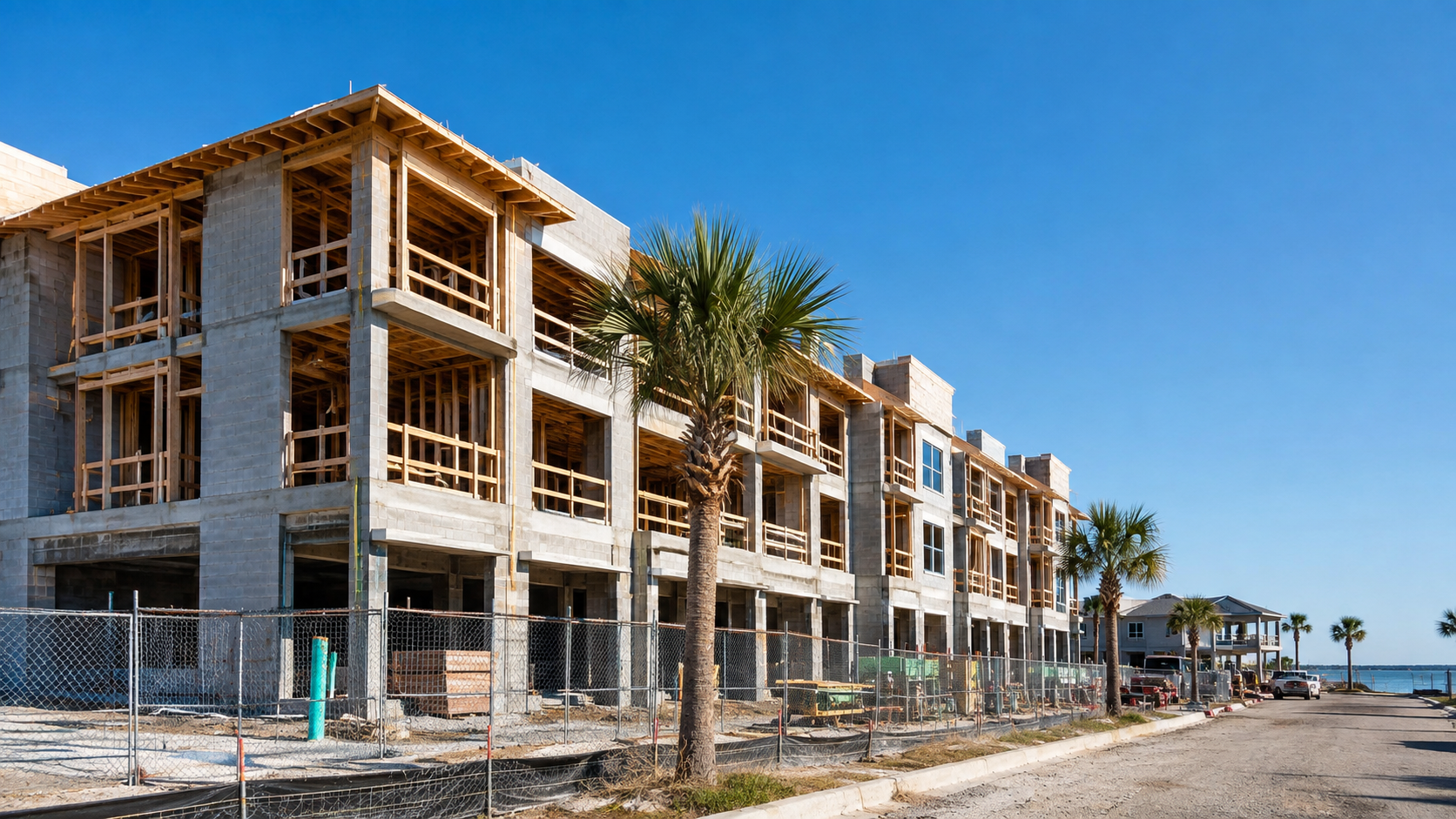
Apartment builder permit requirements in Duval County are not one permit but a sequence of approvals: zoning and land use verification, civil and site plan review, a master building permit, separate trade permits for each discipline, and a fire and life safety review that runs alongside all of it. Understanding that sequence is what separates a realistic multifamily schedule from an optimistic one, because in Northeast Florida the permitting stage – not construction – is usually the least predictable part of the calendar. Ofir Engineering is a licensed Florida general contractor (License #CGC 1540016) with 15+ years serving Jacksonville, Ponte Vedra, St. Johns, and Northeast Florida.
What Apartment Builder Permit Requirements Actually Cover
A single-family home in Jacksonville is reviewed as a residential structure. An apartment building is not. Once you cross into three or more attached dwelling units, the project is generally reviewed under the commercial provisions of the Florida Building Code rather than the residential volume, and that changes almost everything about the paperwork. Plans must be signed and sealed by a Florida-registered architect and engineer. Fire sprinkler and alarm systems come into scope. Accessibility requirements apply to common areas and to a defined percentage of units. Stormwater management is engineered and permitted separately.
The practical consequence is that an apartment builder is coordinating several parallel review tracks at once, each with its own reviewer, its own comment cycle, and its own clock. A builder who treats them as sequential loses months. A builder who runs them in parallel and anticipates the comments finishes the approval stage in a fraction of the time.
Before the Permit: Zoning, Concurrency and Site Plan Approval
Nothing else matters until the land use question is settled. The first step is confirming that the parcel’s zoning district permits multifamily at the density you intend, and that the site can meet setback, height, buffer, parking and open space standards without a variance. If it cannot, you are looking at a rezoning or an administrative deviation, and those are measured in months, not weeks.
Concurrency review comes next: the county confirms that roads, water, sewer and school capacity can absorb the units you are proposing. JEA availability for water and sewer service is its own application and frequently drives the critical path, particularly on parcels that need an extension of existing mains. Civil engineering – grading, drainage, stormwater retention, utility routing – is submitted for site plan review, and on many sites the St. Johns River Water Management District also has jurisdiction over the stormwater system. Environmental review for wetlands or protected trees can attach here as well.
None of this is building permit work. It all happens first, and an experienced apartment builder starts it during design rather than after drawings are complete. The same discipline applies across our new construction program, and it is covered in more depth in our guide to the Duval County building permit process.
The Building and Trade Permits an Apartment Builder Pulls
Once site approvals are in hand, the vertical permits follow. The master building permit covers the structure itself and is issued against the sealed architectural and structural drawings. Under it sit the trade permits, each pulled by the appropriately licensed subcontractor: electrical, plumbing, mechanical, roofing, and low voltage. Fire sprinkler and fire alarm permits are reviewed by the fire marshal rather than the building department, and on multi-story buildings the elevator permit is a separate state-level approval through the Florida Department of Business and Professional Regulation.
Several ancillary permits catch builders who have not done this before. Demolition, if anything is being removed. Right-of-way and driveway connection permits for the entrance. A NPDES stormwater notice of intent for sites over an acre. Signage. Pool and amenity structures. Each is small on its own; collectively they are a common source of delay because they are remembered late. The Florida Building Code text that governs all of it is published by the Florida Building Commission.
How Long Duval County Permit Review Actually Takes
Realistic expectations matter more than optimistic ones. Zoning verification is quick when the parcel already permits the use, and long when it does not. Civil and site plan review typically runs a couple of months through its first cycle and rarely clears without comments. Building plan review for a commercial-classified apartment building takes considerably longer than the residential turnaround most owners have heard about, and fire review runs on its own track. Add JEA capacity and service agreements, which can be the longest single item on the list.
The number that actually governs your schedule is not the first review time but the number of comment cycles. Each round of reviewer comments, resubmittal and re-review adds weeks. A complete, code-current, fully coordinated submittal that clears in one or two cycles will beat a rushed submittal that clears in four, even if the rushed one was filed earlier. That is the single largest lever an apartment builder controls.
The Inspection Sequence From Footing to Certificate of Occupancy
Permits authorize work; inspections release it. The sequence begins with erosion control and footing inspections before any concrete is placed, then slab and underground plumbing, then the structural frame. Rough-in inspections for electrical, plumbing and mechanical must pass before insulation and drywall close the walls. Sheathing and window installation are inspected for wind-load compliance, which in Northeast Florida is not a formality.
Toward the end, the fire marshal tests sprinkler and alarm systems, the elevator receives its state inspection, and accessibility compliance is verified in common areas. Final building, electrical, plumbing and mechanical inspections follow, and only when all of them are cleared does the Certificate of Occupancy issue – the document that legally allows tenants to move in and rent to begin. Our article on the Certificate of Occupancy process in Jacksonville explains what a CO does and does not permit.
What Delays an Apartment Permit, and How to Avoid It
The delays repeat from project to project. Incomplete submittals that trigger an immediate rejection. Utility capacity discovered late. Stormwater designs that do not satisfy the water management district. Drawings that are internally inconsistent between architectural, structural and MEP sets. Fire access routes and hydrant spacing that do not work on the approved site plan. Trade permits pulled by subcontractors who let a license or insurance certificate lapse.
Every one of these is preventable in pre-construction. Verify zoning and utility capacity before you buy or design. Hold a coordination review across all disciplines before submitting. Schedule a pre-application meeting with the county so the reviewers see the project before it lands on their desk. And confirm every subcontractor’s license is active through the Florida DBPR license portal before they file. For context on how apartment work sits alongside other multifamily formats, see our overviews of apartment building in Jacksonville and multifamily construction. To scope a specific parcel, start at our contact page.
Frequently Asked Questions
Does an apartment building need a commercial permit in Duval County?
Generally yes. Once a project reaches three or more attached dwelling units it is typically reviewed under the commercial provisions of the Florida Building Code, which requires sealed architectural and engineering drawings, fire sprinkler and alarm review, and accessibility compliance in common areas.
Which permit takes the longest on an apartment project?
Usually utility capacity and service agreements, or civil and stormwater approval, rather than the building permit itself. These start earliest and run longest, which is why an experienced apartment builder opens them during design instead of after drawings are finished.
Can construction start before every trade permit is issued?
Site work can often begin under an early site or foundation permit while vertical review continues, but each trade must have its own permit issued before that trade’s work begins. Working ahead of an issued permit risks a stop-work order and re-inspection fees.
Who pulls the permits, the owner or the apartment builder?
The licensed general contractor pulls the master building permit and each licensed subcontractor pulls its own trade permit. Owners should avoid pulling permits themselves, because the permit holder carries code compliance responsibility for the work.
Keep Building With Ofir Engineering
Related discussions & follow us: Facebook · Reddit
Latest & related guides: Explore more Custom Home Construction guides →