
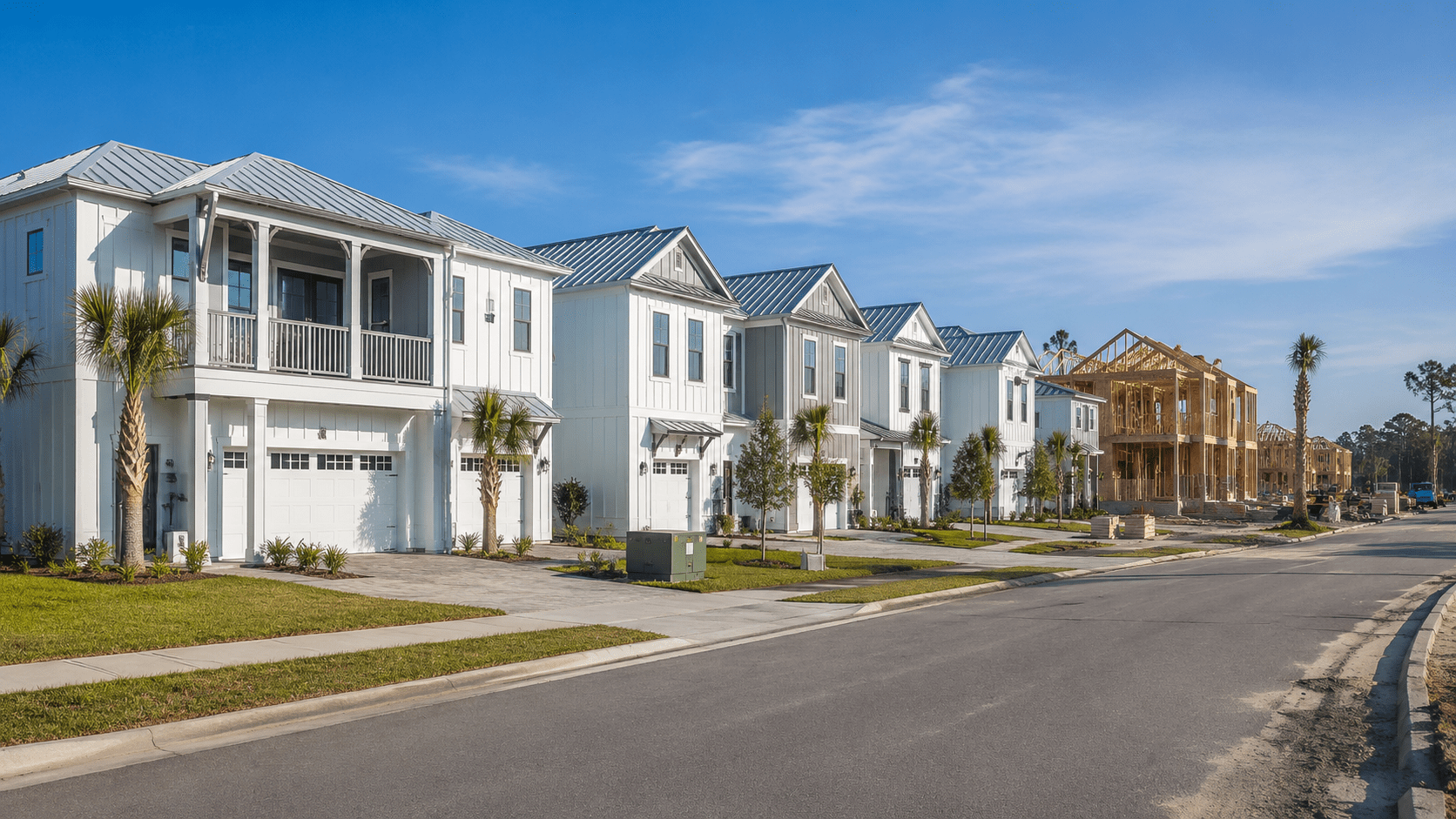
Choosing a build to rent builder versus alternatives is an underwriting decision before it is a construction decision. The competing paths — acquiring existing scattered-site rentals, buying and repositioning an older asset, or self-performing as owner-builder with directly contracted trades — each win under specific conditions in the Jacksonville market, and lose badly outside them. The honest answer depends on your basis, your hold period, and how much schedule risk your capital can absorb. Ofir Engineering is a licensed Florida general contractor (License #CGC 1540016) with 15+ years serving Jacksonville, Ponte Vedra, St. Johns, and Northeast Florida.
The Four Realistic Paths
Investors in Northeast Florida usually weigh four options. Ground-up build to rent delivers a purpose-designed community of new units under one contract. Scattered-site acquisition buys existing houses one at a time. Value-add repositioning buys an older asset and renovates it into rentable condition. Owner-builder self-performance keeps the general contractor’s fee by contracting each trade directly.
They are not interchangeable. They differ in basis per door, in how quickly rent starts, in maintenance exposure for the first decade, and in how much of the risk sits with you rather than with a contracted party. Our overview of build-to-rent construction for Jacksonville investors covers the delivery model itself; this article is about when to choose it.
Where a Build to Rent Builder Wins
Scale on a single site. Fixed costs — mobilization, site work, engineering, permitting management, supervision — spread across many units. At ten or twenty doors on one parcel the per-unit overhead falls to a level scattered acquisition cannot match, because every scattered purchase carries its own closing costs, its own inspection, and its own rehab mobilization.
Repetition. One floor plan built repeatedly gets faster and cheaper as the crews learn it, and it standardizes the maintenance inventory. One water heater model, one HVAC platform, one cabinet line across the community turns turnover into a routine instead of a research project.
Code-current product and low early maintenance. New construction to current Florida code carries manufacturer warranties and contractor warranty obligations, and it arrives with modern wind and envelope performance that affects insurability. The first years of ownership carry very little capital expenditure — the opposite of a 1970s acquisition where roof, HVAC and plumbing all age toward the same replacement window.
Designed for renting. Purpose-built rental product can be specified around durability and turnover cost — surfaces that survive tenants, layouts that appraise and lease well, parking and utility metering arranged for multiple households from the start.
Where the Alternatives Win
Scattered acquisition wins on time to rent and on basis in a soft market. A purchased house can be leased in weeks. Ground-up construction spends months in design and permitting before a single unit exists, and that carry is real money. If existing homes are trading below replacement cost in your submarket — which happens in specific pockets and specific cycles — buying is simply cheaper than building, and no amount of construction efficiency closes the gap.
Repositioning wins when the bones are sound and the location cannot be replicated. Infill lots near employment and good schools are finite. An older asset in a location you cannot buy new sometimes justifies the renovation risk, particularly when the improvement stays below the flood-zone substantial improvement threshold.
Self-performance wins only in narrow circumstances. It saves the contractor’s fee, and for an experienced developer with an established trade base and real capacity to supervise daily, that saving is genuine. For everyone else it usually costs more than it saves: sequencing errors, trades that will not return for a one-off job, failed inspections and schedule slippage all land on the owner, along with the permit liability. Florida also limits what an owner-builder may do and how the resulting property may be sold or rented, so verify the constraints before choosing this route.
How to Run the Comparison Honestly
Compare total basis per door, not construction cost per square foot. Include land, site work, impact and utility connection fees, design and engineering, permitting, financing and interest carry, and lease-up costs. Then set that against the acquisition path’s purchase price, closing costs, immediate rehab, and — this is the line most models omit — the capital reserve required over the first ten years for a building with aged systems.
Model the timeline in months of lost rent. If ground-up takes a year longer to produce income, that carry belongs in the comparison as a real cost. Model insurance separately for each path, because a new code-compliant structure and a 1970s structure are not rated alike in Florida and the difference persists every year of the hold.
Finally, be honest about risk transfer. Under a contract with a licensed general contractor, schedule and workmanship risk sits with a counterparty who carries insurance and warranty obligations. As an owner-builder, all of it sits with you. That transfer has value, and it is the reason the fee exists.
The Decision Rule
Build to rent is generally the cheaper path when you control a parcel that supports several units, your hold period is long enough to earn back the higher basis through lower maintenance and better insurability, and financing is in place so carry is predictable. Acquisition is generally cheaper when existing product is trading below replacement cost, when you need income immediately, or when the site you want cannot be built new. Self-performance makes sense only when you are, in practice, already a builder.
Most investors who get this wrong do so by comparing a construction quote to a purchase price. To pressure-test a specific Jacksonville site or portfolio, see our commercial construction service and our Jacksonville turnkey investment property guide, or contact Ofir Engineering. You can verify any contractor’s license through the Florida DBPR before you sign.
Frequently Asked Questions
Is building rentals cheaper than buying existing houses in Jacksonville?
It depends on whether existing homes are trading above or below replacement cost in your submarket. When they trade below it, buying wins on basis. When they trade above it, or when you control a parcel that supports several units, ground-up construction usually wins on basis per door and on first-decade maintenance.
How many units does a build to rent project need to make sense?
There is no fixed number, but the economics improve sharply once fixed costs — mobilization, site work, engineering, permitting and supervision — spread across multiple doors on one parcel. A single detached unit rarely justifies the ground-up path against acquisition.
Can I act as my own builder to save the contractor fee?
Florida permits owner-builder permits in defined circumstances with limits on scope and on how the property may later be sold or rented. The fee saving is real, but so is the transfer of scheduling, workmanship and permit liability back to you. It generally only pays for owners with an established trade base and daily supervision capacity.
What costs do investors most often leave out of the comparison?
Interest carry during design and permitting, impact and utility connection fees, lease-up costs, and the ten-year capital reserve on an acquired building with aged roof, HVAC and plumbing. Leaving those out systematically flatters the acquisition path.
Keep Building With Ofir Engineering
Related discussions & follow us: Facebook · Reddit
Latest & related guides: Explore more Commercial Construction guides →