
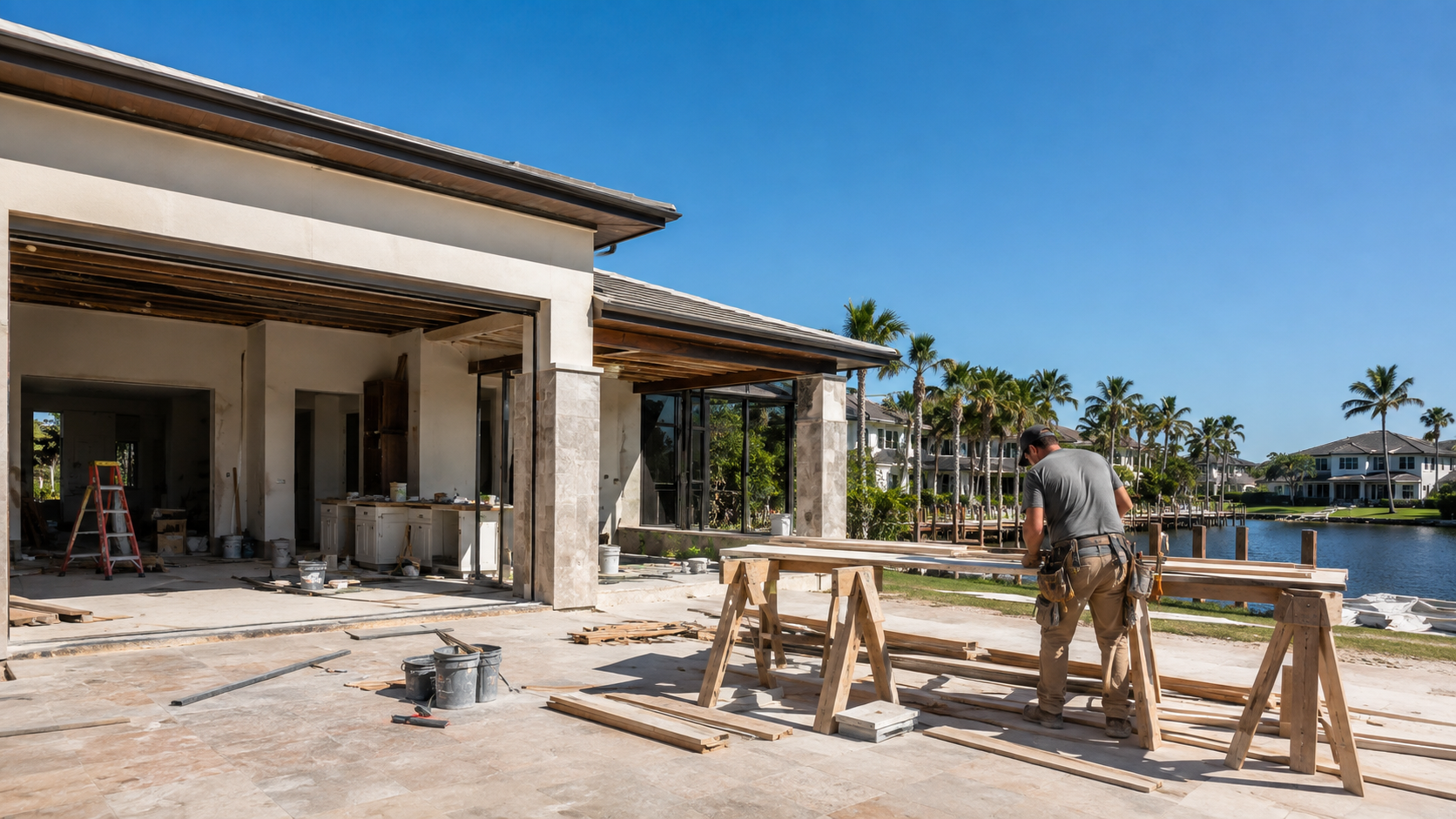
Hiring a remodel contractor in Jacksonville usually starts with three bids that do not resemble each other, and the natural instinct is to assume the cheapest one found efficiencies the others missed. Far more often, the spread reflects three different scopes, three different allowance assumptions, and three different levels of risk being carried by the contractor rather than by you. Learning to read a remodeling bid is the most valuable hour a homeowner can spend. Ofir Engineering is a licensed Florida general contractor (License #CGC 1540016) remodeling homes across Jacksonville, St. Johns, Clay, and Nassau counties.
How a Remodel Contractor Builds a Price
A credible remodeling bid is assembled from the bottom up. The contractor takes off quantities from the scope, gathers subcontractor pricing for demolition, framing, electrical, plumbing, mechanical, drywall, flooring, and finishes, adds material costs, then layers on general conditions — supervision, dumpsters, protection, portable facilities, permits — plus overhead, insurance, and profit. Renovation carries an extra ingredient that new construction does not: unknowns behind the walls. A responsible bid either prices a contingency for those unknowns or states plainly which conditions are excluded.
That is where bid spreads are born. A low number frequently means the contingency was left out, allowances were set optimistically, or a scope item such as electrical panel upgrade or structural repair was quietly excluded. It is not necessarily dishonest, but it does mean the risk has been shifted to you, and it surfaces later as change orders. Our whole-home remodeling proposals price concealed-condition contingency openly.
What Actually Drives Remodeling Cost
Scope depth matters more than square footage. A cosmetic refresh that keeps every wall, every fixture location, and every system in place is a fundamentally different project from a remodel that moves plumbing, relocates load-bearing walls, or replaces the electrical service. The moment a wall moves or a fixture relocates, you have triggered engineering, permitting, inspections, and multiple trades that a paint-and-flooring project never touches.
House age is the second driver, and Jacksonville has a wide range of housing stock. Older homes may hide cloth or aluminum wiring, cast-iron drain lines at the end of their service life, undersized panels, failing subfloor, or framing that was modified by a previous owner without permits. None of that is visible at the walkthrough, and all of it costs money to correct. Third is finish level, which behaves in remodeling exactly as it does in new construction: selections set the price. Fourth is occupancy — remodeling around a family in residence takes longer and requires more protection and phasing than working in an empty house.
Permits, Code, and the Cost of Doing It Properly
Structural, electrical, plumbing, and mechanical work require permits in Duval and the surrounding counties, and permitted work is inspected against the Florida Building Code. Permits add fees and schedule, and homeowners occasionally ask whether they can be skipped. They cannot, in any way that ends well: unpermitted work surfaces at resale, can void insurance claims, and may have to be opened up and redone for inspection. A remodel that also improves the envelope — new windows, better insulation, updated HVAC — may additionally trigger energy-code compliance, which is a cost but also a long-term saving.
An experienced local contractor prices permitting realistically and manages inspections as part of the schedule rather than treating them as interruptions. Our home remodeling team handles permitting, inspections, and trade coordination as one integrated scope.
Comparing Bids Without Getting Burned
Put the proposals side by side and normalize them before comparing totals. Confirm each includes the same scope and the same allowances, and that allowances are based on products you would actually choose. Check whether demolition, debris removal, permits, and protection are included. Ask what happens if the crew opens a wall and finds failed plumbing — is there a contingency, an hourly rate, or a change order at full markup? Ask who supervises daily and how many other jobs that person is running.
Verify the license is active and unencumbered through the Florida DBPR license portal, and confirm general liability and workers’ compensation coverage. An unlicensed or uninsured contractor is not a discount; it is an uninsured liability sitting inside your home. References from projects of similar scope and age of house tell you more than a portfolio of the contractor’s largest job.
Planning a Remodel Budget That Holds
Set the budget in three parts: the contracted scope, a realistic allowance schedule priced from real products, and a contingency for concealed conditions. Decide in advance which upgrades you will accept if the walls reveal a problem, so the decision is made calmly rather than under pressure with a crew standing by. And sequence the work sensibly — systems and envelope first, finishes last — so you are never demolishing something you just paid to install. When you are ready for a line-item remodeling number, contact Ofir Engineering. As a licensed general contractor, License #CGC 1540016, we build to code and stand behind the work.
Frequently Asked Questions
Why do remodel contractor bids vary so much?
Usually because the scopes are not identical. Differences in allowances, excluded items such as panel upgrades or structural repair, and whether a contingency for concealed conditions was priced can move a bid substantially. Normalize the scope before comparing totals.
What unexpected costs come up in an older Jacksonville home?
Outdated or unsafe wiring, undersized electrical panels, deteriorated cast-iron drain lines, damaged subfloor, and unpermitted modifications by previous owners. None of it is visible at a walkthrough, which is why a contingency belongs in every renovation budget.
Do I need permits to remodel my house?
Yes for structural, electrical, plumbing, and mechanical work. Permitted work is inspected against the Florida Building Code. Unpermitted work surfaces at resale, can jeopardize insurance claims, and may have to be reopened and redone for inspection.
How do I verify a remodel contractor is legitimate?
Confirm an active, unencumbered license through the Florida DBPR portal, verify general liability and workers’ compensation coverage, and call references from projects of similar scope and house age. Ofir Engineering holds License #CGC 1540016.
Keep Building With Ofir Engineering
Related discussions & follow us: Facebook · Reddit
Latest & related guides: Explore more Whole Home Remodeling guides →