
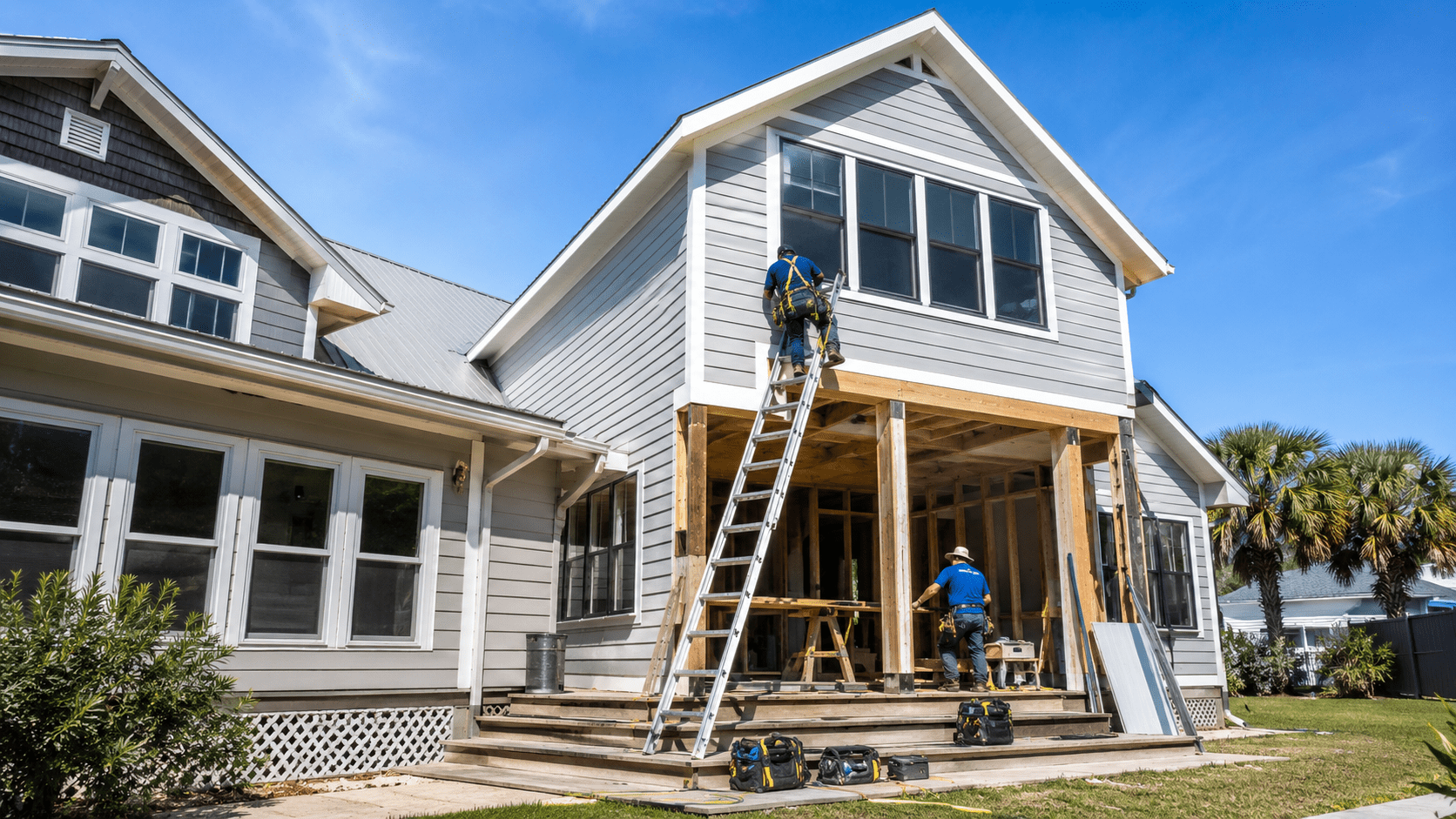
The insurance impact of hiring home addition builders near me is one of the least discussed costs of adding square footage in Florida — and one of the easiest to get badly wrong. An addition changes the replacement cost of the structure, can change the wind rating of the whole building, and creates a construction period during which a standard homeowners policy may not respond as the owner assumes. Handled in the right order, an addition can leave you better insured for a modest increase; handled late, it can produce a coverage gap or a denied claim. Ofir Engineering is a licensed Florida general contractor (License #CGC 1540016) with 15+ years serving Jacksonville, Ponte Vedra, St. Johns, and Northeast Florida.
Why an Addition Moves Your Premium
A Florida homeowners policy is priced primarily on the cost to rebuild the structure. Add conditioned square footage and that figure rises, so Coverage A rises with it and the premium follows. This is not a penalty; it is the policy tracking reality. The danger is the opposite situation — completing an addition and never updating the limit. The structure is then underinsured, and in a partial loss the coinsurance provisions in most policies can reduce the payment on the entire claim, not merely on the new portion.
Beyond raw square footage, several attributes of the addition affect the rate. Roof geometry matters: adding a gable to a house that was previously all hip can reduce a rated wind feature for the whole building. Construction type matters, since masonry and frame are rated differently. Proximity to water and the flood zone of the expanded footprint matter. And any new plumbing, electrical or HVAC generally improves the rating for those systems.
The Wind Credits an Addition Can Win or Lose
Florida carriers credit specific verifiable wind features, recorded on a standard mitigation inspection form. Several of them are assessed for the building as a whole, which means an addition can lift or sink the rating for the original house too.
Opening protection is all or nothing. If the existing house has impact-rated windows throughout and the addition is built with standard glazing, the credit for the entire structure can be lost. Specifying impact-rated units in the addition is usually far cheaper than the credit it preserves.
Roof geometry is measured across the whole roof. A hip roof earns a stronger credit than a gable, and the assessment considers total roof perimeter. A poorly shaped addition can reclassify a previously hip-rated house.
Roof covering and deck attachment. New roof area built to current code is rated favorably, and where the addition ties into the existing roof there is often an opportunity to re-nail and add a secondary water barrier at marginal cost.
Roof-to-wall connections. New framing will use engineered straps by code. Where the addition opens existing soffit or ceiling, upgrading old toe-nailed connections is inexpensive while access exists and expensive afterward. Our guide to wind mitigation retrofit requirements explains the credit tiers.
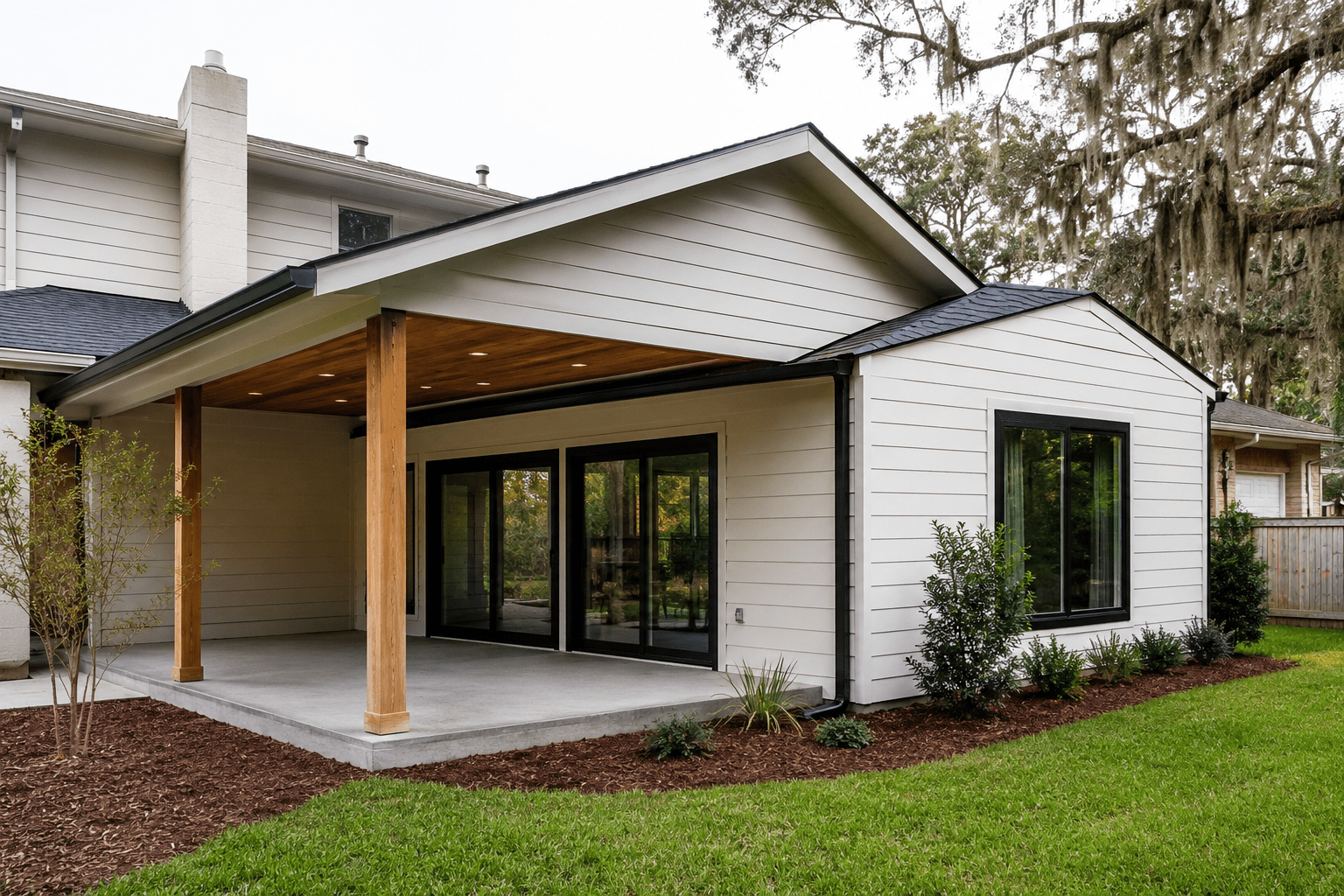
Coverage During Construction — the Gap Owners Miss
Most homeowners assume their existing policy covers the work in progress. Often it does not, or covers it only to a small sublimit. Three separate protections should be confirmed in writing before demolition begins.
Builders risk. This covers the structure under construction and materials on site against fire, wind and theft. Confirm who carries it, what the limit is, whether it covers materials stored off site or in transit, and — critically — that it responds to wind and to water intrusion through an open envelope, which is the realistic exposure in a Northeast Florida summer.
Contractor general liability and workers compensation. Ask for certificates naming you, and verify them with the issuing agent rather than accepting a PDF. An uninsured injury on your property can become your liability.
Notice to your own carrier. Many policies require notification of material alterations, and some restrict coverage while a dwelling is under renovation or vacant. Failing to notify is a common reason a claim is contested. Notify in writing, keep the response, and ask specifically how the policy treats a partially open building. Consumer guidance is published by the Florida Department of Financial Services.
Flood, Elevation and the Substantial Improvement Trap
If the property is in a mapped flood zone, an addition raises two separate questions. The first is regulatory: if the improvement cost reaches half the market value of the structure, the project is a substantial improvement and the entire building must be brought into current flood compliance, typically including elevation. The second is insurance: flood is a separate policy, and the expanded footprint and any change in the lowest floor elevation affect the rating. An elevation certificate reflecting the finished building is usually needed to rate it correctly, and getting one after the fact costs more than scheduling it during construction.
The Sequence That Protects You
Notify your carrier before work starts and get the response in writing. Confirm builders risk and collect verified certificates from the contractor. Specify impact-rated openings and hip-preserving roof geometry in the addition rather than discovering the consequences later. Keep every permit and inspection record — an unclosed permit affects both insurability and resale. On completion, order a new wind mitigation inspection and, in a flood zone, an updated elevation certificate, then have the replacement cost recalculated and the limit raised. To plan an addition around these constraints, see our home additions service and our overview of home addition permits and inspections in Florida, or contact Ofir Engineering.
Frequently Asked Questions
Will a home addition raise my Florida homeowners insurance?
Usually yes, because the premium is driven by the cost to rebuild and an addition increases that figure. The increase is often smaller than owners expect, and can be partly offset when the addition improves wind features or replaces aged systems.
Do I have to tell my insurer about an addition?
Yes. Most policies require notice of material alterations, and some limit coverage while a home is under renovation. Notify in writing before work begins, keep the response, and update the dwelling limit once the addition is complete.
Can an addition cost me my wind mitigation discount?
It can. Opening protection is assessed on the weakest opening in the building, so standard windows in an addition can forfeit the credit for the whole house. Roof geometry is also assessed across the entire roof, so adding a gable to a hip-roofed home can reduce that credit.
Who pays if the addition is damaged before it is finished?
Normally builders risk insurance, supported by the contractor’s general liability policy. Confirm in writing who carries the builders risk, what the limit is, and that it responds to wind and water intrusion through an open envelope before demolition starts.
Keep Building With Ofir Engineering
Related discussions & follow us: Facebook · Reddit
Latest & related guides: Explore more Home Additions guides →