
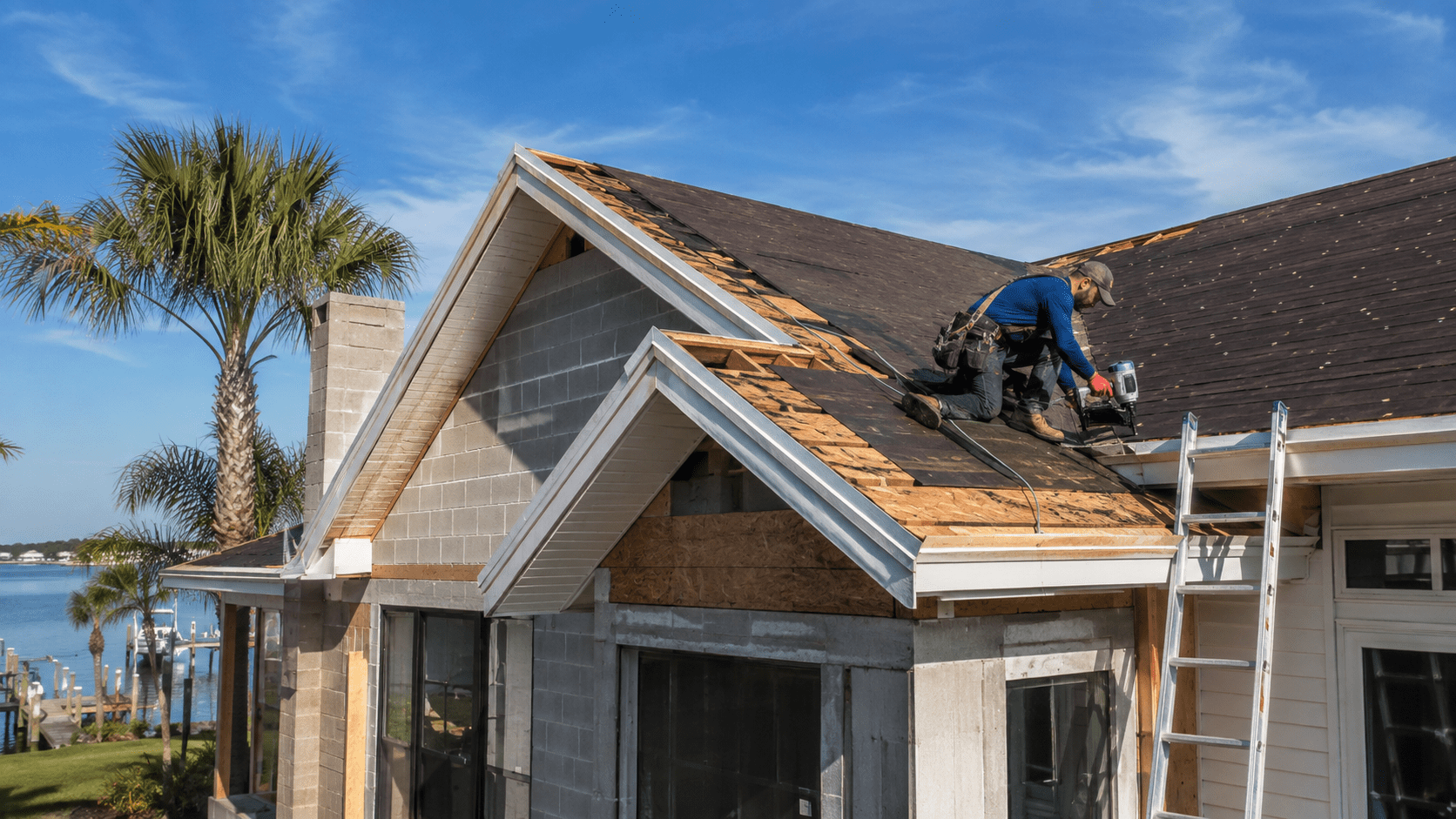
The contractor for home renovation insurance impact in Florida runs in two directions at once, and homeowners usually only think about one of them. The upgrades your renovation delivers can lower your premium permanently. But the renovation itself can quietly narrow — or void — the coverage you are relying on while the work is under way. Both effects are manageable, and both need to be handled before demolition rather than after a claim. Ofir Engineering is a licensed Florida general contractor (License #CGC 1540016) with 15+ years serving Jacksonville, Ponte Vedra, St. Johns, and Northeast Florida.
The Contractor for Home Renovation Insurance Impact While Work Is Under Way
A standard Florida homeowner’s policy is written for an occupied, finished, intact house. A renovation breaks several of those assumptions simultaneously, and carriers respond in ways that surprise owners.
Vacancy provisions. Most policies restrict or suspend coverage once a home has been unoccupied beyond a defined period, commonly measured in weeks. Homeowners who move out for a whole-house remodel frequently trip this clause without knowing it exists, and the coverage that lapses is often exactly the coverage a construction site needs — vandalism, theft and water damage.
An open building envelope. A roof that is off, a wall that is open or windows that are removed change how a carrier views water intrusion. Damage from rain entering an intentionally opened structure is treated very differently from storm damage to a closed one.
Increased value. A house mid-renovation may be worth more than the dwelling limit written when the policy was issued. Materials on site, new systems and new finishes push replacement cost up while your limit stays where it was.
The remedies are ordinary. Notify the carrier in writing before work begins, ask whether a builder’s risk or dwelling-under-renovation endorsement is required, confirm how any vacancy provision applies to your specific project, and raise the dwelling limit to reflect the finished value. Doing all four takes one phone call and one letter.
What Your Contractor Must Carry
Separately from your own policy, verify what the contractor carries — because if a worker is injured or a neighbour’s property is damaged, the question of whose insurance responds is decided by documents signed at the start, not by goodwill at the end.
Ask for a certificate of insurance sent directly by the insurance agency rather than a copy forwarded by the contractor, and confirm general liability coverage and workers’ compensation for everyone on site, including subcontractors. Ask to be named as an additional insured where appropriate. And verify the licence itself is active through the Florida DBPR licence portal. An uninsured trade on your property is a liability you are absorbing whether or not you agreed to.
Permits matter here too. Unpermitted work is a recurring reason claims are reduced or denied, and it complicates both resale and future coverage. Our guide to permits to remodel a house in Jacksonville covers what triggers a permit locally, and our whole home remodeling team pulls and closes them as part of scope.
The Upgrades That Permanently Lower a Florida Premium
Florida law requires carriers to credit specific, verifiable wind-mitigation features, and those features are recorded on a standard inspection form. That makes premium reduction one of the few renovation benefits you can plan for deliberately rather than hope for.
Opening protection. Impact-rated windows, doors and garage doors earn the largest single category of credit — but it is all-or-nothing. One unprotected opening, very often the garage door or a rear slider, forfeits the credit for the whole house. See our overview of impact windows for Florida homes.
Roof-to-wall connection. Many older Jacksonville homes have toe-nailed trusses. Upgrading to clips or wraps moves you between credit tiers, and it is dramatically cheaper while soffit or ceiling is already open during a remodel.
Roof covering, deck attachment and secondary water resistance. A code-current roof with documented product approval, re-nailed decking and a sealed secondary barrier are all rated features, and all are inexpensive additions during a re-roof you were already doing.
Systems modernisation. Updated electrical, plumbing and roofing also affect insurability more broadly. Aging four-point-inspection items are a common reason Florida carriers decline or non-renew a policy, so replacing them during a remodel can matter more than the premium credit itself. Broader retrofit scope is covered in our guide to wind mitigation retrofit requirements in Jacksonville.
Sequencing It So the Money Actually Lands
Credits apply at renewal, and only after the finished condition is documented. That gives you a clear sequence: specify the rated features during design, permit the work, complete and close the permits, then schedule the wind-mitigation inspection on the finished house and file it with your carrier. Owners who inspect too early, or who never file the form, pay for the upgrades and receive nothing.
Ask your contractor to treat the mitigation inspection and the closed permit record as closeout deliverables. Ask for product approval documentation for every exterior component, since the inspector cannot credit what is not documented. Consumer guidance on Florida property insurance is published by the Florida Office of Insurance Regulation, and your own agent can tell you which credits your specific carrier applies.
Frequently Asked Questions
Do I need to tell my insurer before starting a renovation?
Yes. Notify your carrier in writing before work begins. A renovation can trigger vacancy provisions, change how water intrusion is treated while the envelope is open, and leave your dwelling limit below the home’s finished replacement cost.
Will my homeowner’s policy cover damage during construction?
Often only partially. Many policies restrict coverage on an unoccupied or opened structure, which is why carriers commonly require a builder’s risk or renovation endorsement for the duration of the work.
Which renovation upgrades actually reduce a Florida premium?
Verifiable wind-mitigation features: opening protection on every glazed opening, upgraded roof-to-wall connections, code-current roof covering, improved deck attachment and a secondary water barrier. They are credited only after a mitigation inspection documents the finished condition.
Can unpermitted renovation work affect a claim?
It can. Unpermitted work is a recurring reason claims are reduced or denied, and it also complicates resale and future coverage. Pulling and closing permits protects both the insurance position and the value of the work.
Plan the Insurance Side With the Renovation
Handled deliberately, the same dollars that satisfy the building code also move your policy — but only if the sequence is right. If you are planning a renovation in Jacksonville or Northeast Florida, contact Ofir Engineering to scope the work, the permits and the mitigation deliverables together.
Keep Building With Ofir Engineering
Related discussions & follow us: Facebook · Reddit
Latest & related guides: Explore more Whole Home Remodeling guides →