
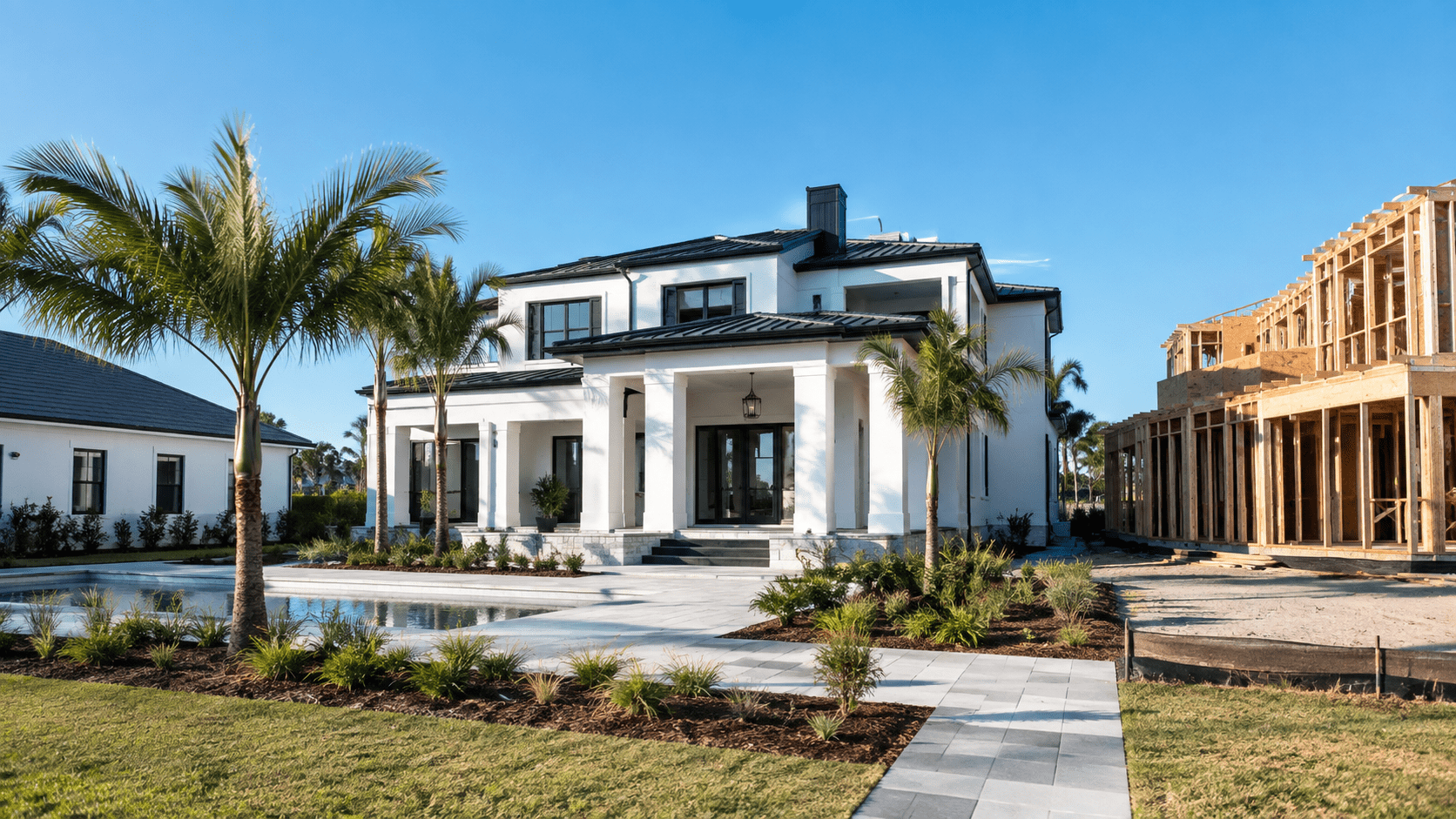
Weighing high end home builders versus alternatives in Jacksonville comes down to one honest number: the all-in cost per finished square foot of the house you actually want to live in, on each available path. Buying an existing luxury home looks cheaper on the listing sheet and frequently is not. Building custom looks expensive on the contract and sometimes is not. The answer depends on how far the existing inventory sits from your requirements, and that gap is measurable before you commit a dollar. Ofir Engineering is a licensed Florida general contractor (License #CGC 1540016) with 15+ years serving Jacksonville, Ponte Vedra, St. Johns, and Northeast Florida.
High End Home Builders Versus Alternatives: The Four Real Options
Most buyers at this level believe they have two choices. They have four, and each carries a different risk profile.
Buy an existing luxury home. Fastest, most price-transparent, and the only path with no construction risk. Buy and renovate to standard. Lets you choose the location first and the finishes second, but couples a purchase price to an unknown scope. Hire a production or semi-custom builder. Lower cost per square foot, fixed plan library, limited structural flexibility. Hire a high end custom builder. Highest control over site, plan, structure and specification; highest coordination requirement; the price is set by what you specify rather than what the market last paid.
The mistake is comparing a listing price against a construction contract. Those are not the same unit. A listing price is a finished, furnished-adjacent, immediately occupiable asset. A construction contract is a scope of work that still needs land, design, permitting, carrying cost and time. Normalize both to total delivered cost before you compare anything.
Option One: Buying an Existing Luxury Home in Northeast Florida
Buying wins decisively when the inventory already matches your requirements. In established Jacksonville luxury corridors — Ponte Vedra Beach, Nocatee’s custom sections, San Marco, Ortega, the Deerwood and Glen Kernan area — there is genuine depth of supply, and a home built in the last decade will already carry current-code wind resistance and modern mechanical systems.
Where buying quietly loses is in the delta between what you buy and what you want. Every luxury purchase we see followed by a renovation within eighteen months had the same profile: the buyer accepted an eighty percent match and planned to fix the remaining twenty percent. That twenty percent — moving a stair, opening a rear wall to the water, replacing a mechanical system, reworking a primary suite — is the most expensive construction there is, because it is structural work performed inside a finished building. You pay twice: once for the finish you demolish, once for the finish you install.
Option Two: Buying and Renovating to a Luxury Standard
Buy-and-renovate is the strongest play when the location cannot be replicated. Deep-water frontage, a mature-oak lot in Avondale, an Intracoastal parcel — if the land is the asset and no comparable lot is for sale, then acquiring the structure on it and rebuilding to your specification is rational even at a cost premium.
It is the weakest play when the location is ordinary and the structure is merely dated. At that point you are paying market price for a building whose systems, layout and envelope you intend to replace, and the renovation carries the one risk a new build does not: concealed conditions. Nobody knows what is behind the drywall until it is open. Our guide to renovating an old Florida house versus building new works through that threshold in detail, and the whole home remodeling program exists precisely for the cases where the answer is renovate.
Option Three: The Production and Semi-Custom Builder
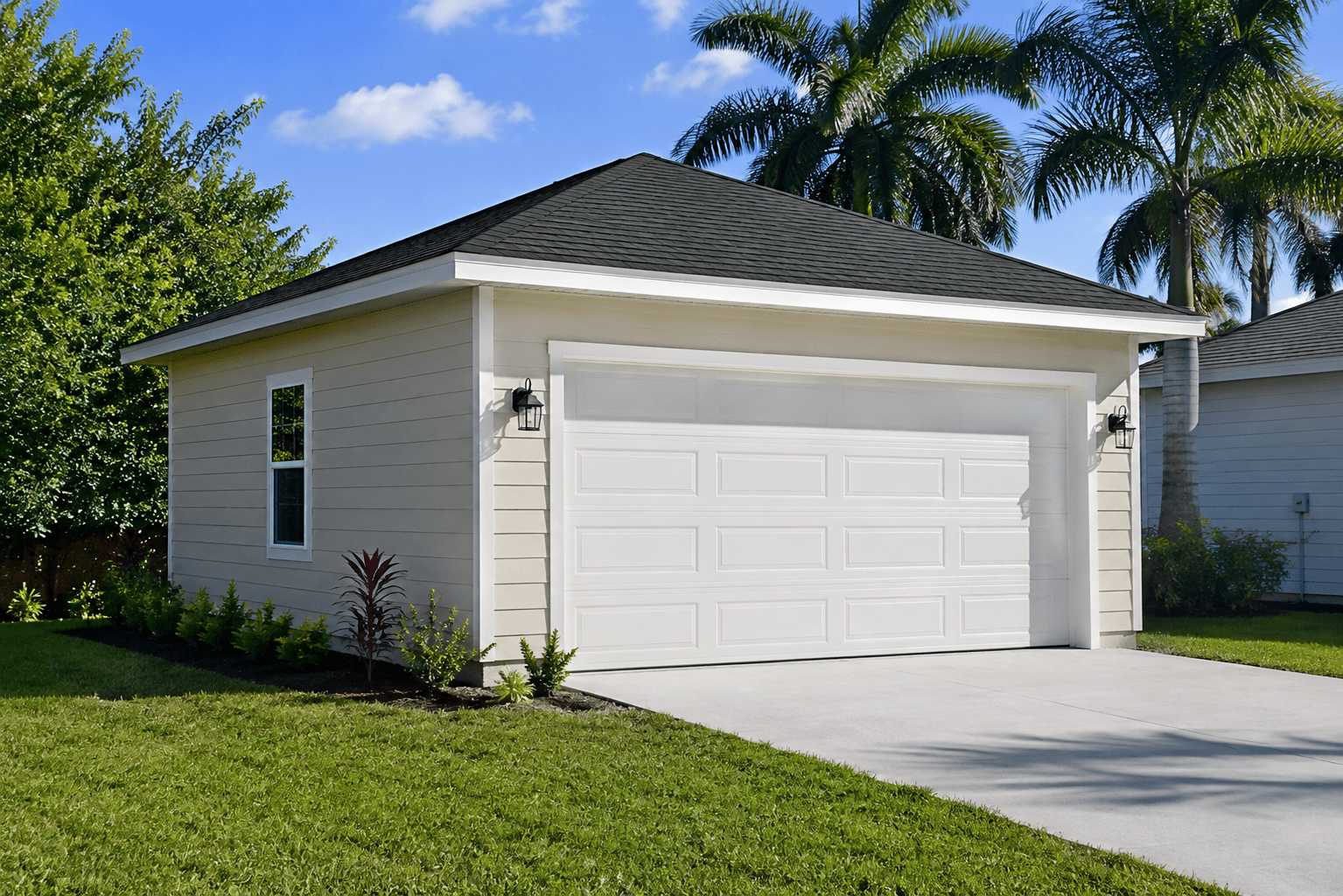
Semi-custom builders deliver real value and should not be dismissed. They buy materials in volume, run the same subcontractor crews through the same details repeatedly, and carry design and engineering costs across hundreds of homes. That efficiency is genuine and it shows up in the price.
The constraint is structural. You are selecting from a plan library on a lot the builder controls, with a defined options catalog. If your requirements live inside that catalog, a semi-custom builder is almost certainly the cheaper path and you should take it. If your requirements involve a specific lot you already own, an unusual footprint, a structural span the plan library does not contain, or a specification level above the options list, the change-order path to get there costs more than building it correctly from the start.
When Hiring a High End Home Builder Is Genuinely the Cheaper Choice
Four situations tip the math toward custom, consistently.
You already own the lot. Land is the single largest variable in Northeast Florida luxury pricing. If it is already yours — inherited, purchased years ago, or subdivided from family property — a comparable finished home on the open market embeds today’s land value at today’s price. Our build on your own lot overview covers this scenario specifically.
Your requirements are unusual. Multigenerational layouts, a home elevator, a conditioned collector garage, a true accessible primary suite, a serious home office wing. Retrofitting these into an existing house is structural surgery. Designing them in costs the marginal price of the space.
The site is demanding. Waterfront, flood zone, or coastal-exposure lots need engineering decisions made at the foundation, not corrected later. Waterfront luxury construction and flood zone planning both start at design, and a purchased home built before current standards cannot be economically brought up to them.
You intend to hold long term. Custom’s cost premium amortizes over the hold period. Over twenty years, a house that needs nothing beats a house that needs a renovation in year three, on total cost of ownership and on insurance and energy performance both.
When a High End Home Builder Is Not the Cheaper Choice
Three cases, stated plainly, because a builder who will not name them is not worth hiring.
First, when your timeline is short. Design, permitting and construction on a custom luxury home is a multi-year commitment in Northeast Florida. If you need to be in a house within months, buy. Second, when existing inventory genuinely matches. If a home on the market meets your requirements and the price is at or below replacement cost, buying is the correct financial decision and there is no argument against it. Third, when the budget is at the edge. Custom construction resolves hundreds of open decisions, and every one is an opportunity to spend more. A buyer with no contingency is better served by a fixed price on a finished asset.
How to Run This Comparison on Your Own Project
Do it in four steps. Write your non-negotiable requirements before you look at anything. Price the closest existing listing that meets them and add the honest cost of the gap. Price the custom path all-in — land, design, engineering, permits, construction, site work, landscape, carrying cost, contingency — not just the construction contract. Then compare cost per finished square foot on the same basis, and weigh time and risk against the difference.
If you want the underlying numbers, our luxury custom homes cost guide and high end home builders cost guide give current Jacksonville ranges, and how to choose a luxury home builder covers vetting. Verify any contractor’s license through the Florida DBPR license portal before you sign, whichever path you choose. To have this comparison run against a specific lot and program, see our luxury home builder service or contact us.
Frequently Asked Questions
Is building a custom luxury home cheaper than buying one in Jacksonville?
Sometimes. Building is usually cheaper when you already own the lot, when your requirements fall outside available inventory, or when the site needs engineering that an existing home lacks. Buying is usually cheaper when inventory genuinely matches your requirements and the asking price is at or below replacement cost.
How do I compare a listing price to a construction contract fairly?
Normalize both to total delivered cost. Add land, design, engineering, permits, site work, landscape, carrying cost and contingency to the construction contract, and add the honest cost of closing the requirements gap to the listing price. Then compare cost per finished square foot.
Is buying and renovating a cheaper middle path?
Only when the location cannot be replicated. If the land is the asset, renovating is rational. If the location is ordinary and the structure is merely dated, you are paying market price for systems and finishes you intend to demolish, and concealed conditions add risk a new build does not carry.
What is the biggest hidden cost in the custom path?
Time and decisions. Design and permitting run long, carrying costs accrue throughout, and each of several hundred specification choices is an opportunity to exceed budget. A realistic contingency and a builder who prices the true scope in pre-construction are the two controls that matter most.
Keep Building With Ofir Engineering
Related discussions & follow us: Facebook · Reddit
Latest & related guides: Explore more Luxury Home Builder guides →