
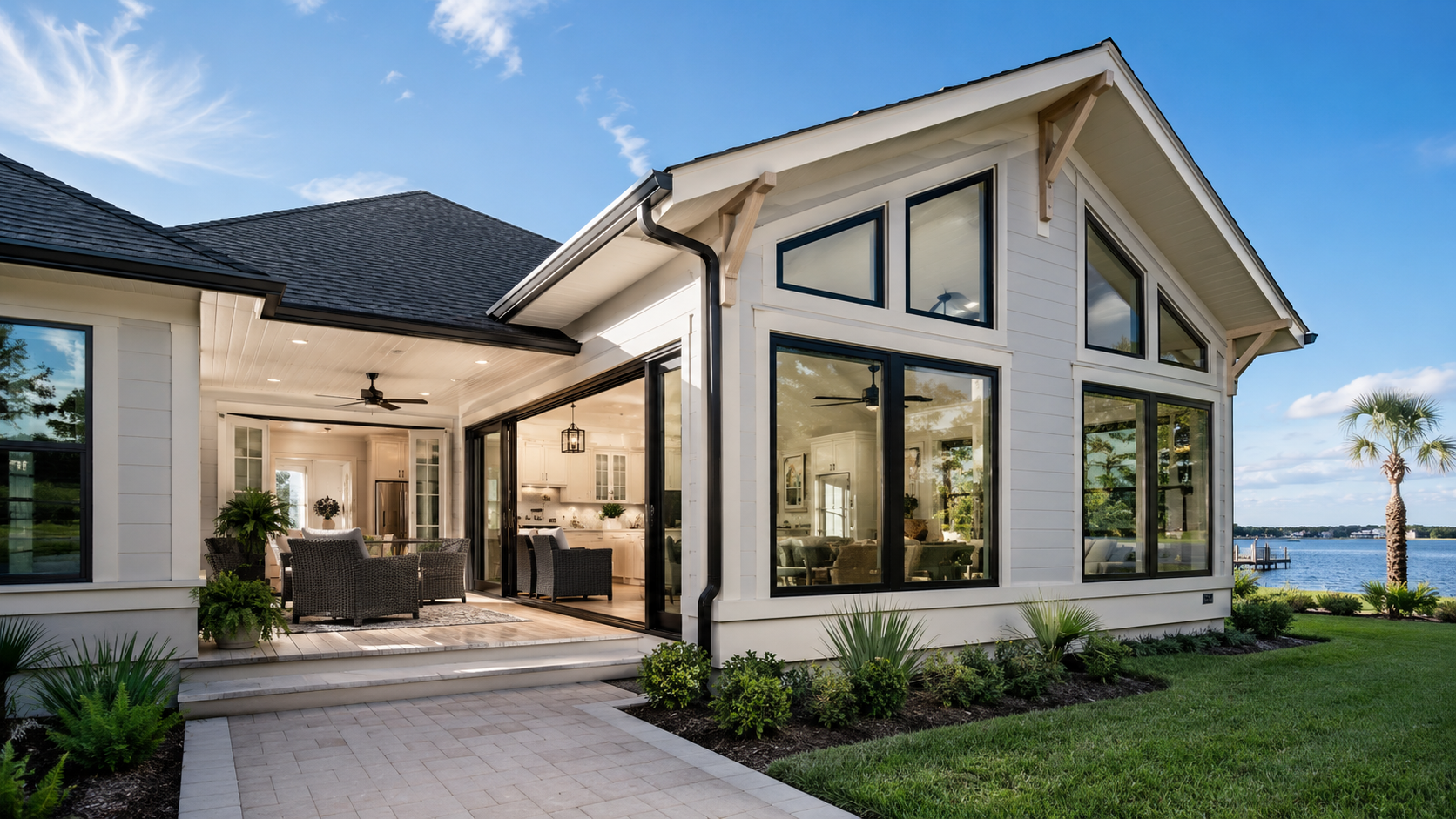
Home addition resale value in Northeast Florida depends far less on how much you spend than on what kind of space you add. Conditioned square footage that matches the rest of the house tends to appraise well; specialty space that no comparable home has tends not to. Understanding how appraisers actually credit an addition — and which types of addition the Jacksonville market rewards — is what separates an improvement that returns capital from one that simply improves your life. Ofir Engineering is a licensed Florida general contractor (License #CGC 1540016) with 15+ years serving Jacksonville, Ponte Vedra, St. Johns, and Northeast Florida.
How Appraisers Actually Credit a Home Addition
An appraisal is a comparison exercise, not a receipt review. The appraiser finds recently sold homes similar to yours and adjusts for differences, and the largest single adjustment is usually gross living area — heated and cooled square footage under the roof. That is why the most important distinction in this entire topic is conditioned versus unconditioned space. A properly permitted, heated and cooled addition adds to your home’s living area. A screened porch or unconditioned bonus space does not, no matter what it cost.
Two other factors govern the result. The addition has to be permitted and reflected in the county property record, because unpermitted square footage creates disclosure problems and appraisers may decline to credit it. And it has to be consistent with the neighborhood — value is capped by what buyers in your area actually pay, so the most expensive house on the street rarely recovers the premium.
Additions That Tend to Return the Most
A primary suite addition performs well in this market when the existing home is short on bedrooms or has no true owner’s suite. It adds conditioned square footage and fixes a functional deficiency at the same time, and functional deficiencies are where the strongest returns hide. The same logic applies to adding a bathroom in a home that only has one — the jump from one to two changes the pool of buyers who will consider the house at all.
A family room or great room addition also performs, particularly on older Jacksonville homes with compartmentalized layouts that no longer match how buyers live. And a second-story addition can be the strongest option on a small lot where building out is impossible, though it is the most structurally involved path. Our comparison of a room addition versus a second-story addition covers that trade-off.
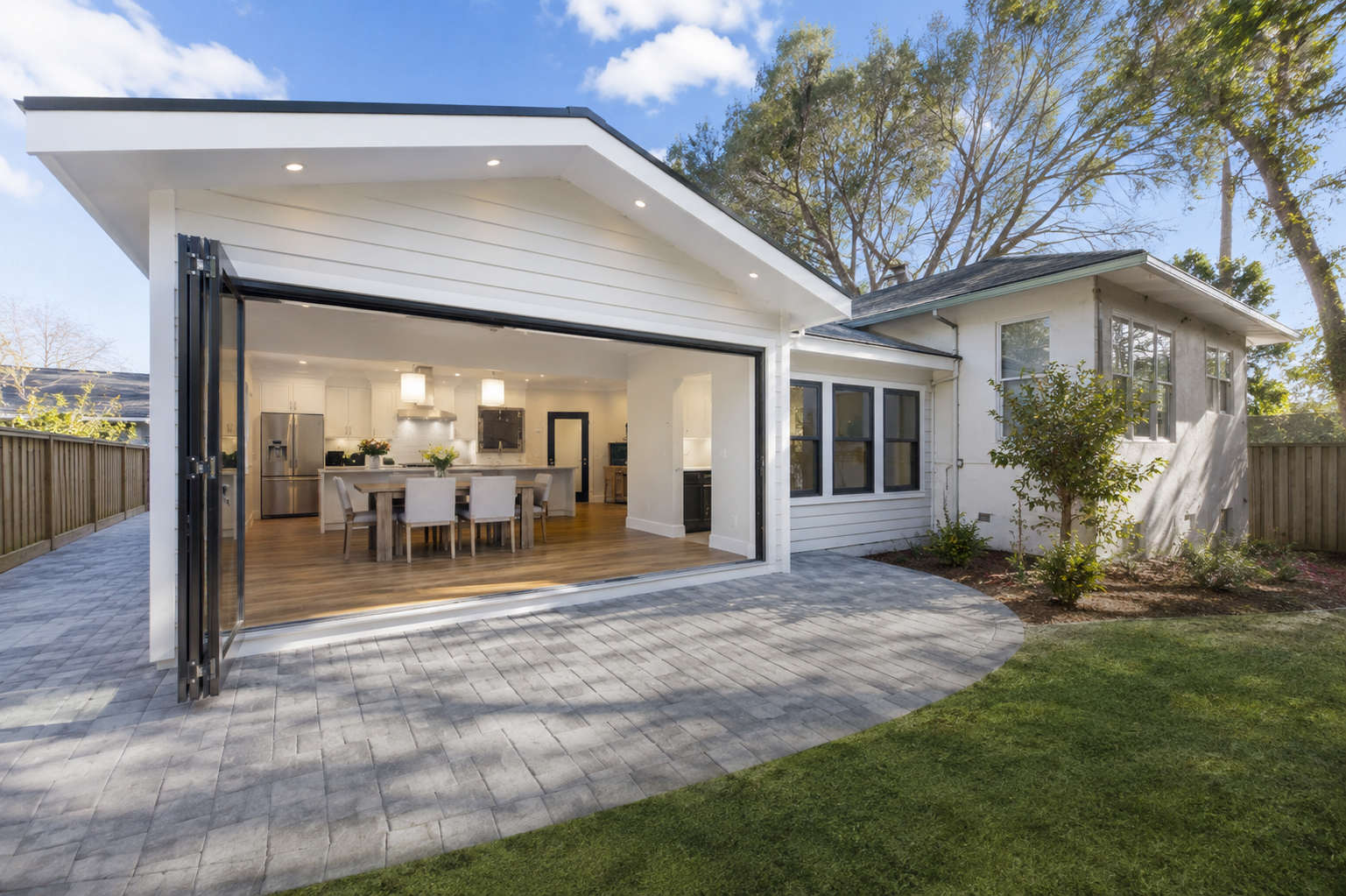
Additions That Return Less Than They Cost
Sunrooms and Florida rooms are the clearest example. They are genuinely enjoyable and they are usually built as unconditioned space, which means they add little or nothing to gross living area even when well built. If you want one for how you live, build it. Just do not underwrite it as an investment. Our guide to sunroom and Florida room additions explains when conditioning the space changes that calculation.
Garage conversions are the other common disappointment. Converting a garage adds living area on paper but removes covered parking and storage, and in this market many buyers value the garage more than the extra room. Highly personalized space — a home theater, a hobby room, a workshop-style bonus area — falls in the same category: the next buyer rarely pays for someone else’s specific enthusiasm.
The Accessory Dwelling Exception
An accessory dwelling unit behaves differently from the rest of this list because it can produce income, not just space. In neighborhoods where the zoning allows it and short or long-term rental demand exists, an ADU or in-law suite is evaluated partly on the income it generates and partly on the flexibility it offers multigenerational buyers. Both are real. Zoning is the gate, and it varies significantly across Duval, St. Johns, Clay, and Nassau counties, so confirm before you design.
What Protects the Value You Build
Four things determine whether an addition holds its value at resale. It has to be permitted and inspected, so it appears legitimately in the property record. It has to be structurally tied into the existing house properly — our article on home addition structural tie-in explains why the roof and foundation connection matters more than the finishes. It has to match the existing home in style, ceiling height, and finish level, because an addition that reads as an afterthought devalues the whole. And the flow has to make sense; a bedroom you reach by walking through another bedroom loses much of its worth.
The mechanical side matters too. Adding conditioned space without confirming that the existing HVAC can carry the load produces a room that is uncomfortable year-round in our climate, and buyers notice within thirty seconds of walking in.
Deciding With the Numbers in Front of You
Start by asking what the addition fixes rather than what it adds. Additions that resolve a functional deficiency — too few bedrooms, one bathroom, no owner’s suite, no gathering space — consistently outperform additions that simply enlarge an already adequate house. Then check the ceiling: look at what comparable homes in your neighborhood have actually sold for, because that number caps your recovery regardless of your budget. For broader context, see our overview of home renovation ROI.
Ofir Engineering is a licensed Florida general contractor, License #CGC 1540016, and you can verify any contractor through the DBPR public license lookup. If you are weighing an addition against moving, our home additions team can price the scope and talk through what it realistically returns — start at our contact page.
Frequently Asked Questions
Which home addition adds the most resale value in Northeast Florida?
Generally a primary suite or an additional bathroom in a home that lacks one, because those resolve functional deficiencies rather than simply adding space. Conditioned square footage that matches the existing home’s quality and style is what appraisers credit most reliably.
Does a sunroom add to my home’s square footage?
Usually not. Most sunrooms and Florida rooms are built as unconditioned space, so they do not count toward gross living area even when well constructed. Build one because you will enjoy it, not as an investment — conditioning the space changes the calculation but also the cost.
Will an unpermitted addition hurt me at resale?
Yes. Unpermitted square footage creates a disclosure obligation, appraisers may decline to credit it, and buyers often request a price reduction or require it be permitted retroactively. Permitting is not the place to save money on an addition.
Is a garage conversion a good investment in Jacksonville?
Often not. It adds living area on paper but removes covered parking and storage, and many buyers in this market value the garage more than the extra room. It works best when the home has other covered parking or when the neighborhood does not expect a garage.
Keep Building With Ofir Engineering
Related discussions & follow us: Facebook · Reddit
Latest & related guides: Explore more Home Additions guides →