
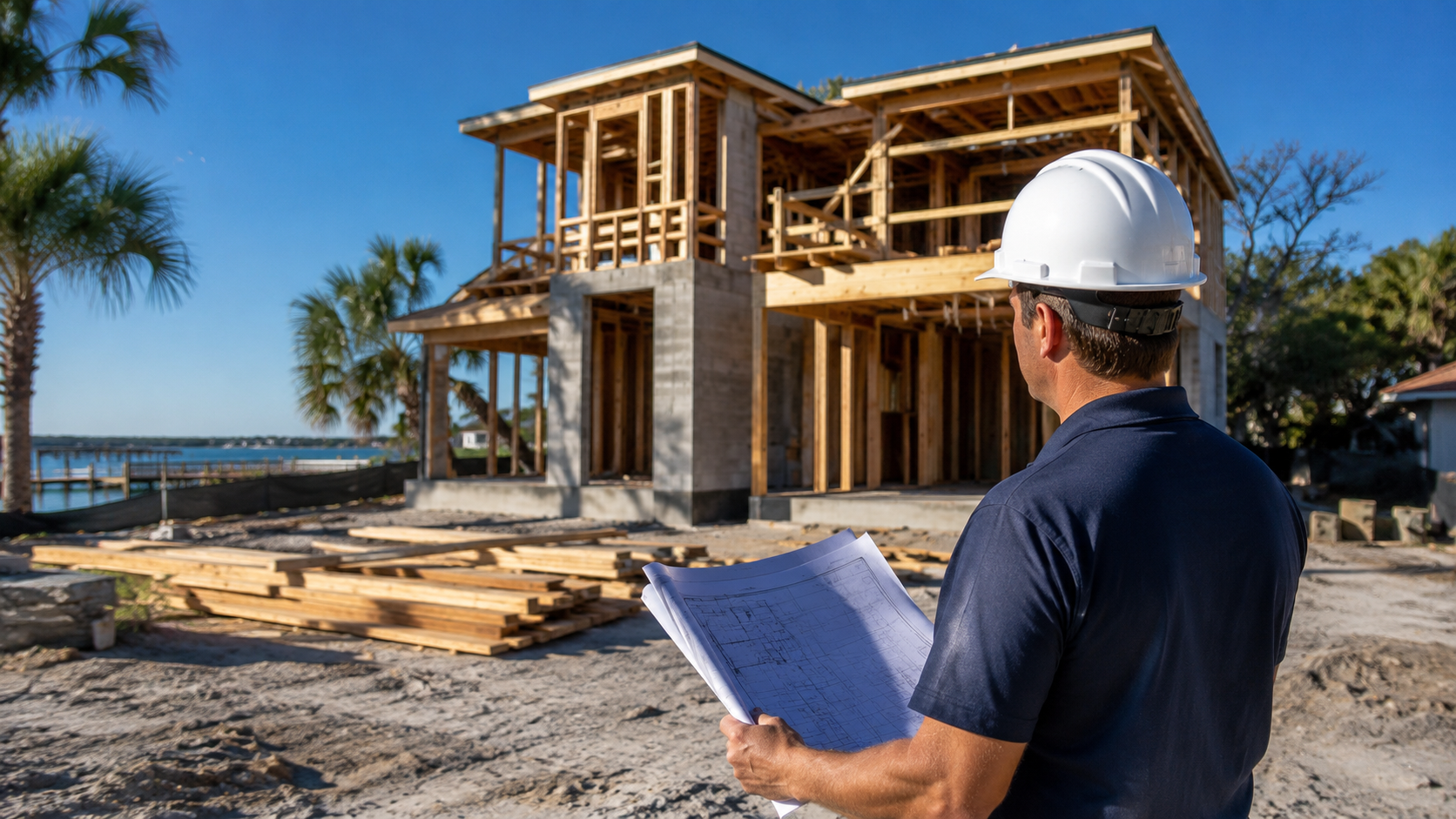
A construction loan draw schedule is the agreed sequence of milestone payments your lender releases as your Florida custom home is built. You do not receive the loan as a lump sum. Instead the bank holds the funds and disburses them in stages — typically after an inspection confirms each milestone is genuinely complete — and you pay interest only on what has been drawn. Understanding how that mechanism works, and what stalls it, protects both your builder’s cash flow and your schedule. Ofir Engineering is a licensed Florida general contractor (License #CGC 1540016) with 15+ years serving Jacksonville, Ponte Vedra, St. Johns, and Northeast Florida.
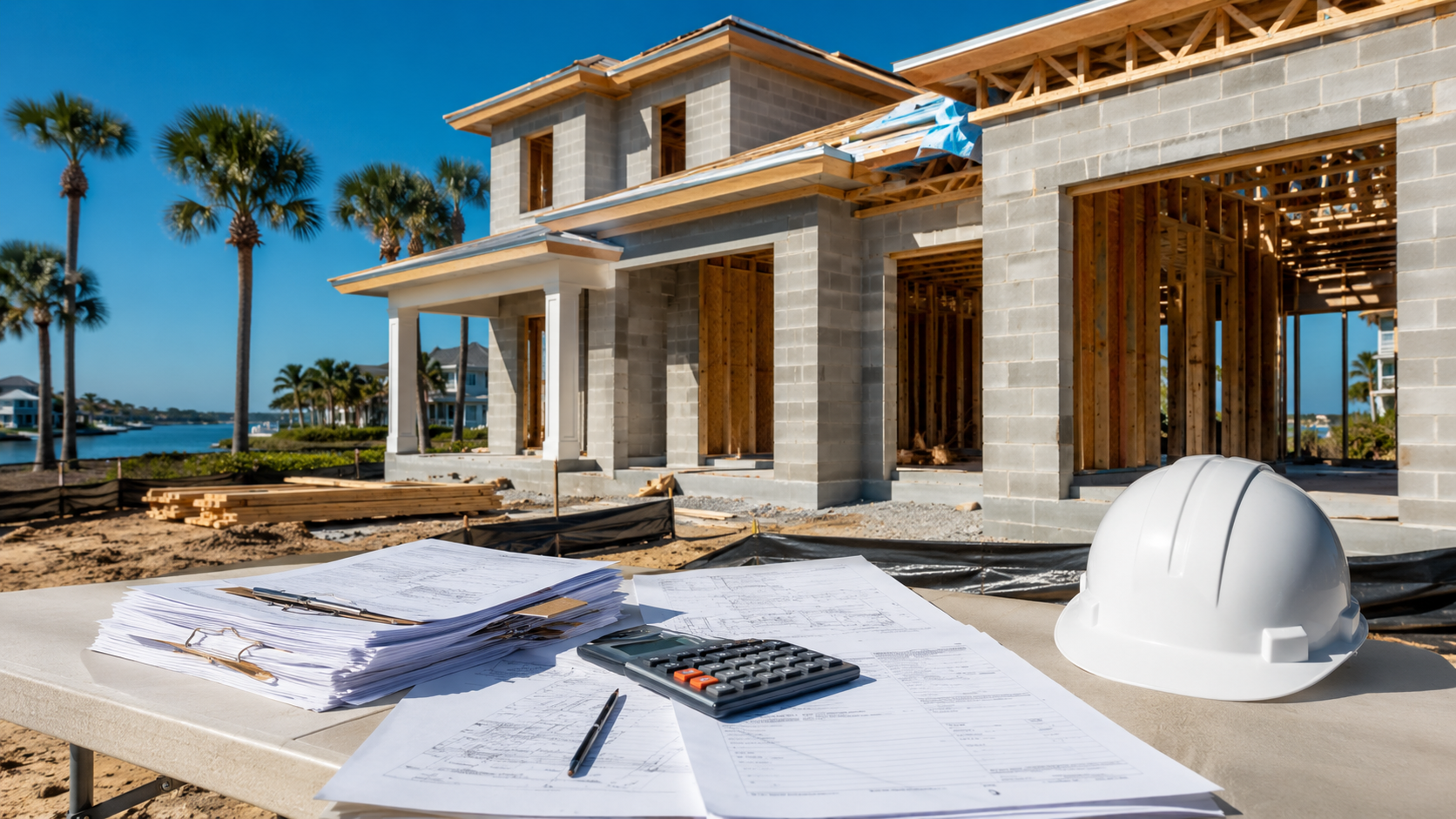
What a Construction Loan Draw Schedule Covers
The draw schedule is negotiated before closing and becomes part of the loan documents. It divides the total construction budget into stages, assigns a dollar amount or percentage to each, and defines what must be complete for that stage to be funded. The builder requests a draw when a milestone is finished; the lender verifies; the funds are released. Because the schedule governs when your builder gets paid for work already performed, an unrealistic or badly structured schedule creates friction for the entire project.
Most Florida construction loans are interest-only during the build, with interest calculated on the outstanding drawn balance rather than the full loan amount. That is why early draws cost you more in total interest than late ones, and why a build that runs long costs money even if the contract price never changes. Our overview of construction loans in Florida covers the loan structures themselves.
The Typical Milestone Stages
Draw schedules vary by lender, but the sequence tracks construction logically. An initial draw often covers permits, plans, and site work. The foundation draw follows once the slab or foundation system is poured and inspected. Framing and dry-in is usually the largest single stage, funded when the structure is up and the building is weather-tight with roofing and exterior openings installed.
Mechanical rough-in comes next, released after electrical, plumbing, and HVAC are roughed and have passed inspection. Then interior finishes — drywall, flooring, cabinetry, trim, and fixtures — often split across two draws. The final draw is released at completion, typically tied to the certificate of occupancy and a clear final inspection. Many lenders hold a retainage percentage back until that final release.

What the Lender Checks Before Releasing Funds
Three verifications typically stand between a draw request and a deposit. The first is a physical inspection: the lender sends an inspector to confirm the claimed percentage of completion actually exists on site. Claiming a milestone that is ninety percent done is the fastest way to fail this step and lose a week.
The second is a title update. The lender orders a search to confirm no liens have been recorded against the property since the last draw, protecting their security position. The third is lien documentation — releases or waivers from the contractor and, depending on the loan, from subcontractors and suppliers who have served notice. Florida’s construction lien law gives parties who provide labor or materials significant rights, which is exactly why lenders insist on this paperwork before every disbursement.
What Actually Delays a Draw
Missing lien releases are the most common cause, and they are administrative rather than technical — a supplier who has not returned a signed waiver can hold the entire draw. Incomplete milestones are second: work that is nearly finished does not fund, and inspectors do not grade on effort. Third is inspection scheduling itself, which is not instantaneous and should be requested with lead time rather than the day the work finishes.
Change orders cause a subtler problem. Work performed outside the approved budget may not be covered by the draw schedule at all, leaving the builder carrying cost that the loan will not reimburse until the budget is formally amended. Approving change orders through the lender before the work happens avoids that gap entirely. Insurance lapses — builder’s risk coverage expiring mid-build — will also stop a disbursement cold.
How the Draw Schedule Interacts With Your Build Schedule
Cash flow and construction sequence are the same conversation. A builder cannot order the next phase of materials without being paid for the last one, so draw delays translate directly into construction delays, which translate into more interest. On a custom home this compounds: a two-week draw delay at framing can push every subsequent trade, and trades that lose their slot do not always come back immediately.
The practical defense is front-loading the administrative work. Confirm who collects lien waivers, agree how far in advance inspections are requested, and align the draw stages with how the builder actually sequences the job rather than with a generic bank template. For how the phases lay out in time, see our custom home build timeline and our guide to the cost to build a house in Jacksonville.
Setting Up a Draw Schedule That Works
Before closing, walk the proposed schedule with your builder and push back where the stages do not match reality. Ask whether the framing and dry-in stage is funded adequately, since it carries heavy material cost. Confirm the retainage percentage and when it releases. Establish who orders inspections and how much notice they need. And make sure the contingency in your budget is inside the loan rather than assumed to come from your pocket.
Verify your builder’s license before any of this — the DBPR maintains a public license lookup for every Florida contractor. Ofir Engineering is a licensed Florida general contractor, License #CGC 1540016. If you are financing a custom build in Northeast Florida, our custom home building team works with lender draw schedules routinely — start through our contact page.
Frequently Asked Questions
How many draws are in a typical Florida construction loan?
It varies by lender, but most schedules use roughly five to seven milestone stages: an initial permits and site draw, foundation, framing and dry-in, mechanical rough-in, interior finishes, and a final draw at completion. Some lenders split finishes into two stages.
Do I pay interest on the whole loan during construction?
No. Most construction loans are interest-only during the build, and interest accrues only on the balance actually drawn. That is why early draws cost more in total interest than late ones, and why schedule delays carry a real financial cost.
What is the most common reason a draw gets delayed?
Missing lien releases or waivers. It is an administrative problem rather than a construction one, but a single supplier who has not returned signed paperwork can hold the entire disbursement. Incomplete milestones and inspection scheduling are the next most common causes.
What happens to change orders in a draw schedule?
Work outside the approved budget may not be covered by the schedule, leaving your builder carrying cost the loan will not reimburse until the budget is formally amended. Approve change orders through the lender before the work is performed to avoid that gap.
Keep Building With Ofir Engineering
Related discussions & follow us: Facebook · Reddit
Latest & related guides: Explore more Luxury Home Builder guides →