
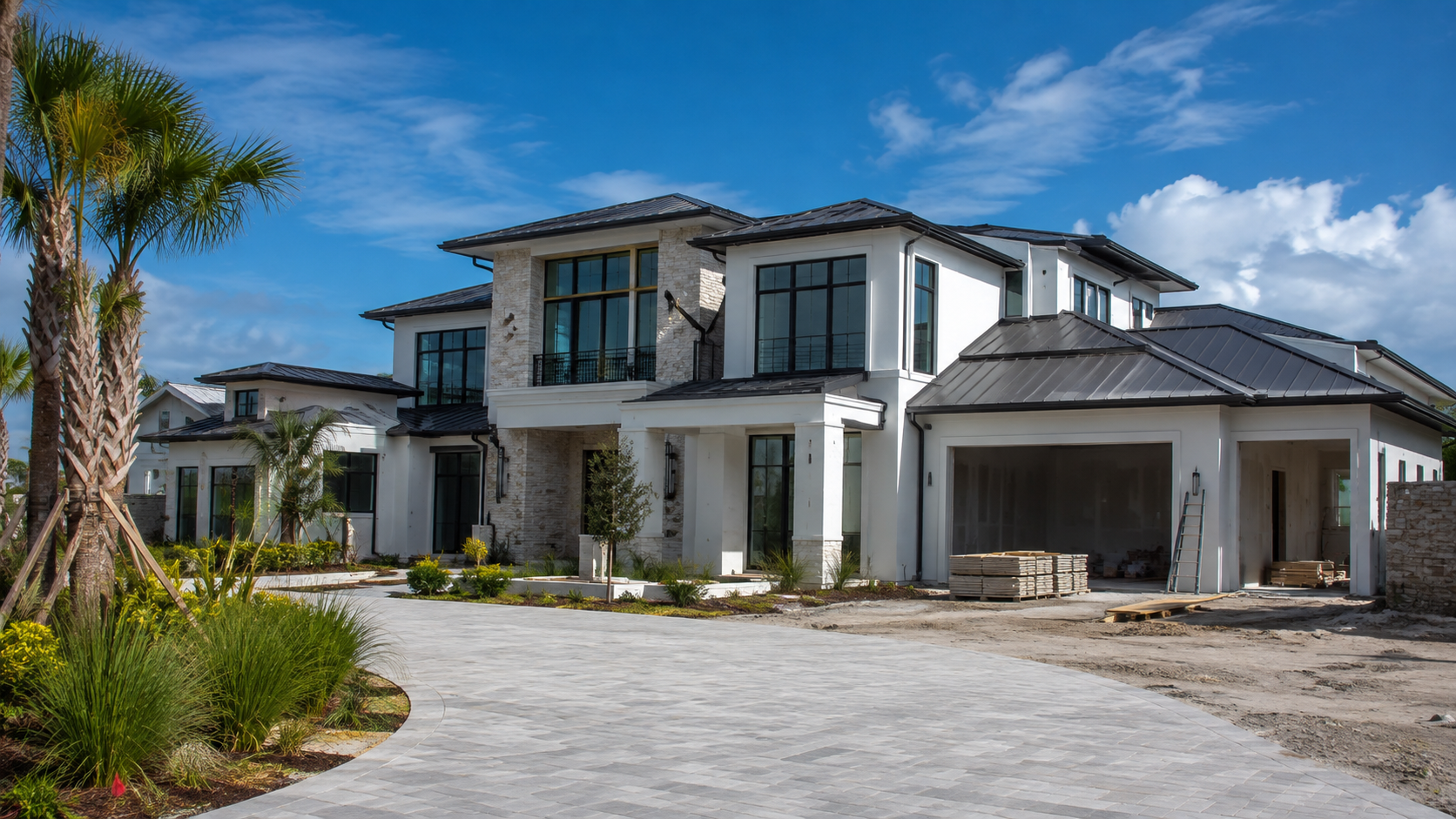
Two luxury custom homes of identical square footage on neighboring Jacksonville lots can differ in price by a factor of two, and almost none of that gap is structural. It sits in the finish tier — the cabinetry, stone, flooring, glass, lighting, and hardware you select, and the specialist labor required to install them correctly. Understanding how finish tiers stack is the single most useful budgeting skill a high-end buyer can develop. Ofir Engineering is a licensed Florida general contractor (License #CGC 1540016) serving Jacksonville, Ponte Vedra Beach, Nocatee, and Northeast Florida.
How Finish Tiers Separate Luxury Custom Homes
It helps to think in three tiers. An entry-luxury home uses premium production materials assembled well: quality stock cabinetry with upgraded doors, engineered stone counters, large-format porcelain, solid-core doors, and impact windows in standard sizes. A true custom tier moves to semi-custom or shop-built cabinetry, natural stone slabs, wide-plank hardwood, custom trim profiles, upgraded plumbing and lighting lines, and windows sized to the architecture rather than the catalog. The top tier is specification-driven: full custom millwork, book-matched stone, steel-and-glass systems, integrated automation, specialty plaster or wood ceilings, and imported materials with long lead times.
The cost jump between tiers is rarely linear, because each step up changes both the material price and the labor pool. Book-matched slabs require a fabricator who can dry-lay and sequence them. Specialty plaster requires an applicator with a waiting list. In a market the size of Jacksonville, the depth of that specialist bench is a real constraint, and scarcity shows up as both price and schedule. Our luxury home construction work spans all three tiers.
Where the Money Concentrates Room by Room
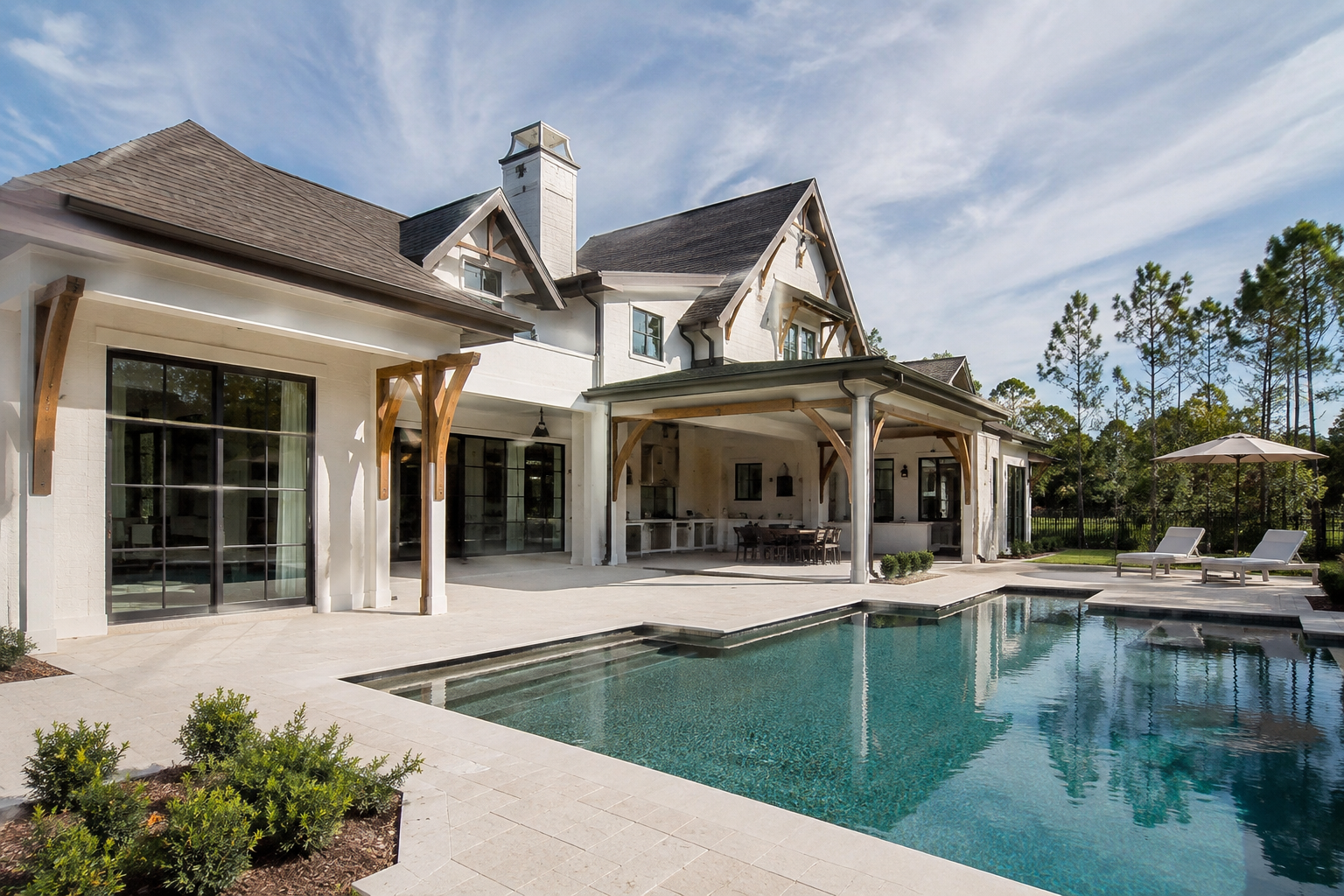
Luxury budgets are not spread evenly. The primary suite, the great room, and the outdoor living area typically absorb a disproportionate share, and in Northeast Florida the outdoor space carries unusual weight — covered lanais, summer kitchens, pool decks, screen enclosures, and outdoor-rated finishes that survive salt air. Secondary bedrooms and utility spaces are where disciplined buyers hold the line, because those rooms rarely drive either daily enjoyment or resale.
Millwork deserves its own line of attention. Built-in cabinetry, paneled walls, coffered or beamed ceilings, and custom closets are labor-intensive, and they are among the items most likely to be underestimated in an early budget. So is glass. Large window and door openings are architecturally defining and expensive twice over: the impact-rated units themselves, and the structural framing and headers required to carry the loads above them.
Coastal Realities That Raise the Baseline
Our climate sets a floor under luxury construction costs that inland markets do not share. Wind-borne debris requirements mean impact-rated glazing across much of the coast. Salt exposure argues for stainless or specialty-coated hardware, corrosion-resistant fasteners, and a roof system chosen for longevity rather than lowest cost. Elevation requirements in flood zones can add engineered fill or a raised foundation before any finish decision is made — you can check a parcel against the FEMA flood map service before you buy.
Mechanical systems also run richer at this tier. Multi-zone HVAC with proper dehumidification, upgraded insulation and air sealing, whole-house generators, water treatment, and structured wiring are close to standard in high-end Northeast Florida homes, and each carries both equipment and design cost. None of this is discretionary decoration; it is what keeps a luxury home performing in a hot, humid, storm-exposed climate.
Upgrades That Hold Value and Upgrades That Do Not
Not every premium dollar returns equally. Investments in the envelope and the systems — impact glass, a long-life roof, insulation and air sealing, quality HVAC — tend to hold value because they lower operating cost, reduce insurance exposure, and never go out of style. Kitchen and primary-bath finishes hold value when they are high quality but not idiosyncratic. Highly personal choices — a bold stone, an unusual color-drenched room, a niche automation platform — deliver enjoyment but rarely return their cost at resale, which is a perfectly good reason to include them as long as the decision is made with open eyes.
The practical approach is to fund the envelope and systems first, then allocate the finish budget to the rooms where you actually spend your time. Our luxury home builder team helps clients rank these decisions before contract, when a change still costs a conversation instead of a change order.
Building a Budget You Can Trust
A credible luxury budget is specification-driven, not average-driven. It prices allowances from real vendor quotes, separates hard costs from soft costs, names the long-lead items, and carries a contingency sized to the complexity of the design. It also states the schedule honestly, because construction-loan interest and general conditions accrue monthly whether or not the imported stone has arrived. When you are ready to translate your plans into a line-item number, contact Ofir Engineering. As a licensed general contractor, License #CGC 1540016, we build to code and stand behind the work.
Frequently Asked Questions
What makes luxury custom homes cost more than standard custom homes?
Finish tier and the specialist labor it requires. Custom millwork, natural stone slabs, oversized impact glass, integrated automation, and specialty ceiling and wall treatments carry both a material premium and a labor premium, because the trades qualified to install them are a small pool in any market.
Which luxury upgrades are worth the money in Northeast Florida?
Envelope and systems upgrades hold value best — impact-rated glazing, a long-life roof, insulation and air sealing, and properly zoned HVAC with dehumidification. They lower operating costs, reduce insurance exposure, and stay relevant regardless of design trends.
How much should I set aside as contingency?
Contingency should scale with design complexity and how finalized the selections are. A fully specified home with locked selections needs less than a home still evolving during construction. The bigger protection is realistic allowances priced from actual vendor quotes rather than market averages.
Do coastal requirements really change the budget?
Yes. Wind-borne debris rules require impact-rated glazing across much of the coast, salt air argues for corrosion-resistant hardware and fasteners, and flood-zone parcels may need engineered fill or a raised foundation. These set a cost floor before any finish decision is made.
Keep Building With Ofir Engineering
Related discussions & follow us: Facebook · Reddit
Latest & related guides: Explore more Luxury Home Builder guides →